

Serpentine Belt Replacement in Hollywood, FL
Keep your vehicle running smoothly with professional serpentine belt replacement at our Hollywood auto repair shop. We inspect the belt, tensioner, and pulleys, replace worn components, and ensure your alternator, AC, and power steering systems perform properly.
Signs Your Serpentine Belt Is Failing
That high-pitched squeal when you start your car on a cool Hollywood morning? It's the serpentine belt.
But squealing isn't the only warning sign. Your belt talks to you in a bunch of different ways before it actually snaps. The trick is knowing what to listen for and what to look at. We see cars roll into our shop with belts that were screaming for help for months. Folks figured the noise would go away on its own. It won't.
Here are the most common signs we see:
-
A loud squealing or chirping noise at startup or during turns
-
Visible cracks, fraying, or glazing on the belt's surface
-
Your AC blows warm air even though the system checks out fine
-
The battery warning light comes on with no clear cause
-
Power steering suddenly feels heavy or unresponsive
That last one catches people off guard. They assume it's a power steering problem, they come in expecting a big repair, and we show them a belt that's hanging on by a thread. Quick fix. Huge relief.
Your serpentine belt drives multiple systems at once. The alternator, AC compressor, power steering pump, and sometimes the water pump all depend on it. When the belt starts slipping or losing tension, those systems lose power one by one.
One scenario we get a lot here in Hollywood. Someone's sitting in traffic on Sunset, the temperature gauge starts climbing, and their AC cuts out. They think the engine is overheating. It is, but only because the belt stopped turning the water pump.
A failing belt doesn't always make noise. Sometimes it just looks rough. Pop your hood, take a look. If you see small cracks running across the ribs or chunks of rubber missing, that belt is done. Don't wait for the squeal.
Why South Florida's Climate Shortens Belt Life
Heat kills serpentine belts faster than almost anything else. And Hollywood sits right in the middle of some of the most punishing conditions a belt can face.
We're not talking about normal wear here. The rubber compound in a serpentine belt breaks down faster when it's constantly exposed to high temperatures. Under your hood, things already run hot. Add 95-degree days from May through October, and that belt is baking from both sides. We see the proof of that in our shop.
But it's not just heat. Humidity plays a role too. Moisture in the air causes micro-swelling in the rubber, then it dries out, then it swells again. That cycle creates tiny cracks along the belt's ribs. Over time those cracks spread. You might not notice anything until the belt starts slipping or squealing on a morning drive down Hollywood Boulevard.
Here's what makes Hollywood especially tough on belts:
-
Stop-and-go traffic near Young Circle and along US-1 keeps engine temps elevated longer
-
Salt air from the coast accelerates rubber degradation, even on parts you can't see
-
Short trips that never let the engine fully cool create constant thermal cycling
-
Rain followed by intense sun means belts rarely stay at a stable temperature

Up north, a belt might last 80,000 or 90,000 miles without showing serious wear. Down here? We regularly pull belts at 50,000 miles that look like they've done double that. The ribs are cracked (though modern belts have a lot less cracking than they dated counterparts), the edges are fraying, and the material feels stiff instead of flexible. The owner had no idea it was that far gone.
So if your car's been living in this climate for a few years, don't assume the belt is fine just because nothing's gone wrong yet. The damage builds quietly. By the time you hear that squeal pulling out of your driveway, you're already close to a failure. Getting ahead of it saves you from being stranded and from the cascade of problems a snapped belt causes with your alternator, AC, and power steering.
What Happens During Serpentine Belt Replacement at Our Shop
You pull into our Hollywood shop, and we get to work. No runaround. No waiting three hours for someone to pop the hood.
Here's how the process goes from start to finish:
-
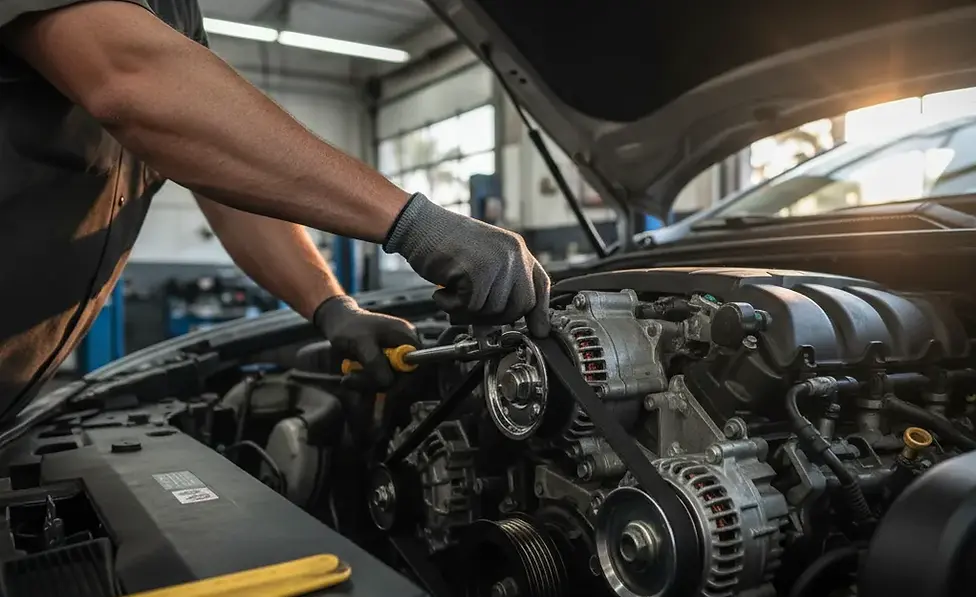
We do a visual check of the entire belt path. That means the belt itself, every pulley it touches, and the tensioner that keeps it tight.
-
We release the automatic tensioner and slide the old belt off. If it's cracked, glazed, or stretched, you'll see exactly why it needed to go.
-
We spin each pulley by hand. A bad pulley bearing can destroy a brand new belt in weeks, so we catch that now.
-
We inspect the tensioner arm and spring. If it's weak or wobbly, we flag it right away.
-
The new belt goes on following your vehicle's exact routing diagram. One groove off and the belt won't track right.
-
We start the engine and watch the belt run under load. We're listening for noise and checking alignment before you leave.
The whole job takes under an hour. Some vehicles come in with engines packed so tight that access is trickier, but we've dealt with just about every layout you can think of.
During the process, we check your coolant hoses and AC lines while we're in there. They sit right next to the belt path. If something's bulging or leaking, you want to know before it becomes a bigger problem.
We will show you the old belt. You deserve to see what came off your car, not just trust a stranger's word. That's how we've built trust with customers in Hollywood for years. ASE-certified techs doing hands-on work, not guessing. Learn more about the services our auto repair shop does every day.
The Tensioner and Idler Pulley, Why They Matter Too
Here's something most shops won't bring up until it's too late.
Your serpentine belt doesn't work alone. It rides on pulleys. Two of the most important ones are the tensioner pulley and the idler pulley. The tensioner keeps constant pressure on the belt so it grips every component it touches. The idler pulley guides the belt's path around the engine. If either one fails, your brand new belt won't last a month. We see this play out in Hollywood all the time, customers come back frustrated because a belt they just had replaced is squealing again or wearing unevenly.
The real problem was never the belt itself.
A worn tensioner loses its spring tension over time. When that happens, the belt slips and can't grip the alternator or AC compressor the way it should. You'll hear a chirping noise on startup, especially on cool mornings near the coast. The idler pulley wears differently. Its bearing dries out and starts grinding. That sound is rougher, more metallic. Both problems put stress on a belt that's doing its job just fine.
So when we do a serpentine belt replacement, we always check these parts before we button anything up:
-
Tensioner spring resistance and arm movement
-
Idler pulley spin test for bearing roughness or play
-
Pulley surface condition for glazing or grooves
-
Alignment of all pulleys in the belt path
If something feels off during inspection, we'll let you know right there. Replacing a tensioner or idler at the same time as the belt saves labor because we're already in there. Skipping it means pulling everything apart again later. Drivers in stop-and-go traffic put extra load on these components and they wear faster than highway driving would.
A bad pulley doesn't always make noise right away. Sometimes the only clue is uneven belt wear on one edge. That's why hands-on inspection matters more than a quick visual check. It takes an extra minute and saves you a headache down the road.
When a Bad Serpentine Belt Becomes a Roadside Emergency
A worn serpentine belt doesn't just snap without warning. It tells you something's wrong for weeks, sometimes months. But most people don't know what to listen for. According to the Car Care Council, it’s important not to take these routine replacement intervals for granted because they can break down and leave you stranded [1].
Then it breaks on Sunset Boulevard during rush hour. No power steering. No AC. And your engine starts overheating fast because the water pump stopped spinning. That's the reality we see play out over and over again in Hollywood.
Here's what actually happens when the belt fails while you're driving:
-
Your battery light comes on because the alternator stops charging.
-
The steering wheel gets incredibly stiff, almost impossible to turn at low speeds.
-
Your temperature gauge climbs quickly toward the red zone.
-
If you keep driving, the engine can overheat in minutes and cause real damage.
We've towed cars in where the owner thought it was a dead battery or a bad alternator. It's the same story. A $40 belt that cracked and took out every accessory on the engine in one shot.
The serpentine belt drives your alternator, power steering pump, AC compressor, and water pump all at once. One belt does all of that. So when it goes, everything goes. You're not dealing with one problem, you're dealing with four symptoms that all trace back to the same cause.
Can you still drive? Technically, for a very short distance. But you shouldn't. Overheating an engine even once can warp a cylinder head. That turns a simple serpentine belt replacement into a repair that costs ten times more. We've seen it happen to customers who tried to push it just a few more blocks.
Almost every roadside belt failure could've been caught during a routine inspection. A cracked belt, a glazed surface, visible fraying, these are things our team spots in seconds during an oil change or multi-point inspection. Most drivers never think about the belt until they're stuck on the side of the road. Contact our auto repair shop to get an inspection for your vehicle today

Frequently Asked Questions
How do I know if my serpentine belt needs replacing soon?
Your belt is telling you something when you hear squealing at startup or during turns. Other signs include warm air from your AC, a heavy steering wheel, or a battery warning light with no clear cause. You can also just look at the belt. Cracks across the ribs, fraying edges, or a glazed surface mean it's time. Don't wait for a full snap. By then, you're already stranded.
Does Hollywood's heat really affect how long a serpentine belt lasts?
Yes, and it makes a bigger difference than most people expect. Hollywood's heat, humidity, and salt air from the coast break down rubber faster than cooler climates. Up north, a belt might last 80,000 miles. Here, we regularly pull belts at 50,000 miles that look far worse. Stop-and-go traffic near Young Circle and along US-1 keeps engine temps high longer too. If your car has been in South Florida for a few years, get the belt inspected.
What should I expect when I bring my car in for a serpentine belt replacement?
The whole job takes under an hour at our Hollywood shop. We check the belt, every pulley it touches, and the tensioner before anything comes off. You'll see the old belt when we're done. While we're in there, we check nearby coolant hoses and AC lines too. No surprises, no runaround.
Can a failing serpentine belt cause my engine to overheat?
Yes, and this catches a lot of Hollywood drivers off guard. If your belt stops turning the water pump, coolant stops circulating and the engine overheats fast. We see this happen to people sitting in traffic on Sunset. They think it's a major engine problem, but it's the belt. That's why a failing belt isn't just an inconvenience. It can lead to much bigger damage if you keep driving.
Should the tensioner and idler pulleys be replaced at the same time as the belt?
In most cases, yes. The tensioner and idler pulleys wear out on the same schedule as the belt. A weak tensioner lets the belt slip. A worn pulley bearing can shred a brand new belt within weeks. Replacing them together saves you from coming back for the same job again soon. We inspect both every time we do a belt replacement and let you know what we find before any work is done.
How quickly can I get a serpentine belt replaced in Hollywood?
Most serpentine belt replacements are done in under an hour at our shop. We serve Hollywood drivers and can usually get you in the same day or next day. If you're hearing squealing or your AC and power steering are acting up, don't put it off. Call us and we'll walk you through what to expect before you even pull in.