

Signs Your Catalytic Converter Is Failing
That rotten egg smell? It's not coming from the dumpster. It's your catalytic converter.
We get calls about this often in Hollywood. Someone notices a sulfur odor while idling at a red light. Or they feel a sudden loss of power going uphill. They ignore it for a week, maybe two. Then the check engine light pops on and suddenly it feels urgent. It was urgent the whole time.

Your catalytic converter doesn't just fail overnight. It gives you warnings first. You just need to know what to look for:
-
A strong sulfur or rotten egg smell from the exhaust
-
Rattling noises underneath the car, especially at startup
-
Sluggish acceleration that gets worse over time
-
Dark or unusually colored exhaust smoke
-
A check engine light with a P0420 or P0430 code
That rattling sound is one we hear about constantly. It means the honeycomb material inside the converter has broken apart and is literally bouncing around in the shell. Once that happens, exhaust flow gets restricted. Your engine works harder. Your fuel economy drops. And it only gets worse from there.
Most of the time, the customer who comes in already suspected something was off weeks ago.
Maybe you noticed your car struggling to pass someone on Highland Avenue. Or your gas mileage suddenly dropped by three or four miles per gallon. These aren't random problems. A failing catalytic converter chokes your engine's ability to breathe, so everything downstream suffers.
One scenario we see a lot in Hollywood: someone gets a smog check rejection and finds out the converter is the reason. A malfunctioning catalytic converter is one of the most common causes of emissions test failures. Don't wait for that surprise. If your car smells off, sounds off, or drives off, bring it in. We can run an OBD-II diagnostic scan and tell you exactly what's going on in about fifteen minutes.
What Happens When a Catalytic Converter Is Stolen
You walk out to your car in the morning, turn the key, and it sounds like a race car with a broken muffler. That roar isn't normal. It's the first sign someone crawled under your vehicle overnight and cut out your catalytic converter.
We get these calls constantly in Hollywood. Thieves target catalytic converters because they contain precious metals like platinum, palladium, and rhodium. According to the National Insurance Crime Bureau, catalytic converter thefts surged over 800% between 2018 and 2022 [1]. Hollywood hasn't been spared. Customers near Hollywood Boulevard have come in shaken up after discovering their car gutted in a parking lot.

So what actually happens to your car when the converter's gone? Here's what you're dealing with:
-
A loud, aggressive exhaust noise the second you start the engine
-
Your check engine light comes on immediately
-
Rough idling and reduced power while driving
-
Strong exhaust fumes near the cabin, which can be dangerous
-
An automatic emissions test failure, you can't renew registration without fixing it
Driving without a catalytic converter isn't just loud. It's a real safety problem. Those exhaust fumes contain carbon monoxide and can seep into your car's interior. We've had customers tell us they felt dizzy on the drive over. That's not something to push through.
And here's what a lot of people don't realize. We handle catalytic converter replacement with parts that meet those rules, so you won't get stuck failing inspection after already dealing with the headache of theft.
If this just happened to you, don't drive it around Hollywood more than you have to. Bring it in or have it towed. Our team can inspect the damage, check for anything else that got cut or bent during the theft, and get you back on the road. We see this every week, it's one of the most common jobs in our shop right now. You can also check out our full list of auto repair services to see what else we can help with while your car's already up on the lift.
The Diagnostic Step Most Shops Skip
A check engine light comes on. You take it somewhere. They scan the code, see P0420 or P0430, and tell you the catalytic converter needs replacing. No further questions asked.
We see this every week in Hollywood.
Here's the problem. Those codes don't always mean a bad converter. They mean the catalyst system isn't performing right. Could be the converter itself. Could also be an exhaust leak, a failing oxygen sensor, or even a misfiring engine dumping raw fuel into the exhaust. If you replace the converter without checking everything else first, you might spend good money and still have the same light pop back on a week later.
Our diagnostic process goes deeper than a quick code pull. When a car comes into our shop, we run through a real checklist before we ever recommend catalytic converter replacement:
-
Pull all stored and pending codes with a full OBD-II diagnostic scan.
-
Check live oxygen sensor data upstream and downstream of the converter.
-
Inspect the exhaust system for leaks from the manifold back.
-
Look at engine performance data for misfires or fuel trim problems.
-
Test converter efficiency using temperature readings at the inlet and outlet.
That last step is the one most shops skip entirely. A healthy converter runs hotter at the outlet than the inlet because the chemical reaction inside generates heat. If both readings are close, the converter's done. But if the temps look normal and the code's still there, we look elsewhere.
Why does this matter to you? Because a bad diagnosis costs you twice. Once for the wrong repair, once for the right one. We'd rather spend an extra thirty minutes testing than put you through that. Drivers near Hollywood Boulevard bring us cars all the time after another shop already "fixed" the problem. It's the same story, somebody skipped the real diagnostic work.
That's exactly why we won't touch a converter until we're sure it's actually the part that failed.
How Coastal Conditions Affect the Replacement Process
Hollywood sits just miles from the coast. That salt air doesn't stop at your skin.
It gets into every exposed metal surface on your vehicle, and the exhaust system takes the worst of it. We pull catalytic converters off cars near Hollywood Beach and the Broadwalk area that look ten years older than they actually are. Corrosion eats through heat shields, rusts out the flanges, and fuses bolts so tight they snap instead of turn. A catalytic converter replacement that might take two hours inland can take three or four here because of what the ocean air does to the hardware around it.
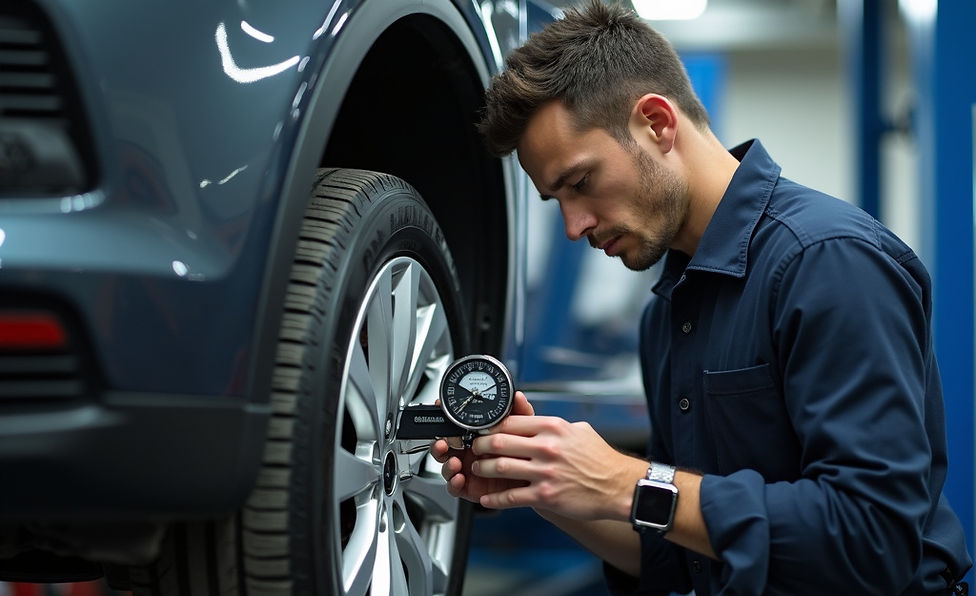
Here's what we deal with regularly on coastal vehicles:
-
Oxygen sensor connections corroded to the point they crumble on removal
-
Exhaust pipe flanges welded shut by rust, requiring cutting tools
-
Heat shield brackets that disintegrate when touched
-
Undercarriage bolts that need penetrating oil and patience instead of a wrench
A vehicle that's spent its life near the water needs extra prep work before the new converter even goes on. We factor that in before we start turning wrenches.
And it's not just the salt. Hollywood's humidity traps moisture against metal surfaces overnight. That cycle of wet and dry speeds up oxidation faster than most people realize. According to the Manufacturers of Emission Controls Association, catalytic converters are built to last the life of the vehicle under normal conditions [2]. But "normal" doesn't account for South Florida's coastal climate.
So what does this mean for you? The shop doing your catalytic converter replacement needs to know what they're walking into. We inspect the full exhaust connection points before quoting any job. If a downstream O2 sensor is seized or the exhaust manifold studs are compromised, we catch that early. No surprises halfway through the job.
We've been doing this work in Hollywood long enough to read the rust like a story. The car tells us exactly what the salt has done, we just have to listen. Contact our auto repair shop in Hollywood, Fl,. and we’ll investigate.
Verifying the Repair Before You Drive Away
This part matters more than most people think.
After we finish a catalytic converter replacement, we don't just hand you the keys. We run a full verification process because we want to know the job's done right before your car leaves our shop. You deserve that confidence, and we need that certainty.
What Our Post-Install Check Looks Like
Here's exactly what happens once the new converter is bolted in and everything's torqued to spec:
-
We clear any stored codes with our OBD-II scan tool and start the engine fresh.
-
We let the vehicle idle for several minutes while monitoring live oxygen sensor data from both upstream and downstream sensors.
-
We watch for the check engine light. If it stays off during warm-up, that's a good first sign.
-
We take the car for a short test drive, usually a loop near Hollywood Boulevard, getting it up to operating temperature under real driving conditions.
-
We recheck the scan tool readings after the drive to confirm the catalytic converter is hitting proper efficiency numbers.

Most of the time, everything checks out clean on the first pass. But when it doesn't, we catch it right there. Not after you've driven home to East Hollywood and the light pops back on.
We also do a visual inspection underneath the vehicle one more time. We're looking at the exhaust connections, the heat shields, the hangers. Anything loose or misaligned gets fixed before you leave. A small exhaust leak at a flange joint can trigger the same symptoms you came in with, so we take this seriously.
And here's something people don't always realize. Your car's computer needs to run through what's called a "drive cycle" before it fully evaluates the new converter. We explain what that means for your specific vehicle. Some cars need 50 to 100 miles of mixed driving before the system runs its full self-test. So if your check engine light doesn't immediately show a passing readiness monitor, that's normal.
Want peace of mind before you drive off? Give us a call and we'll walk you through what to expect.
We've been doing this work long enough to know that a proper verification step separates a good repair from a great one. Our ASE-certified team handles every catalytic converter replacement the same way, whether it's a 2008 Civic or a 2026 SUV rolling through Hollywood.
Frequently Asked Questions
What does a catalytic converter replacement involve, and how long does it take?
Replacing your catalytic converter usually takes two to three hours from start to finish. We remove the old unit and inspect the surrounding exhaust components for damage before installing a new one. Before we bolt anything on, we run a full diagnostic to confirm the converter is actually the problem. That extra step saves you from paying for a repair that doesn't fix the real issue.
Can I drive my car in Hollywood without a catalytic converter after a theft?
You should not drive without a catalytic converter, even for short trips around Hollywood. Carbon monoxide from the exhaust can seep into your cabin and cause dizziness or worse. Beyond the safety risk, you will fail any smog check and cannot renew your California registration. If your converter was stolen overnight, have the car towed to us rather than driving it. We see this situation every week and can get you sorted quickly.
Why does my check engine light come back on after a catalytic converter replacement somewhere else?
That happens when the shop replaces the converter without checking what caused it to fail in the first place. A misfiring engine, a leaking exhaust, or a bad oxygen sensor can all trigger the same P0420 or P0430 code. If those problems are not fixed before the new converter goes in, the light comes right back. We test oxygen sensor data, exhaust leaks, and engine performance before we ever recommend a replacement.
Does California require a specific type of catalytic converter for replacement?
Yes, California requires a CARB-compliant catalytic converter for any replacement on a vehicle registered in the state. CARB stands for California Air Resources Board. A non-compliant part will cause you to fail your smog inspection, even if the converter itself is brand new. This matters a lot in Hollywood, where smog checks are required for registration renewal. We only install parts that meet California standards so you do not run into that problem.
What are the early warning signs that my catalytic converter is failing?
The most common signs are a rotten egg smell from the exhaust, rattling sounds underneath the car at startup, and sluggish acceleration. You might also notice your fuel economy dropping by a few miles per gallon. A check engine light showing a P0420 or P0430 code is another strong signal. Most drivers notice something feels off weeks before the light comes on. The sooner you bring it in, the less damage builds up downstream.
How do I know if my car needs a catalytic converter replacement or just an oxygen sensor?
You need a proper diagnostic to tell the difference, and that is exactly where a lot of shops cut corners. The P0420 code can point to a bad converter, a failing oxygen sensor, or an exhaust leak. We check live sensor data upstream and downstream of the converter and measure temperature at the inlet and outlet. A healthy converter runs hotter at the outlet. If the readings look normal, we keep looking before recommending any parts.