

Ball Joint Replacement in Hollywood, FL
If you hear clunking over bumps, notice loose or wandering steering, or feel vibration through the front end, worn ball joints may be the cause. Ball joints connect the control arms to the steering knuckles and play a critical role in keeping your suspension stable and your wheels properly aligned. Hollywood’s rough roads, speed bumps, parking garages, and daily stop-and-go driving place extra stress on these components, causing them to wear over time. At CM Auto Repair, our technicians inspect the suspension for play, check related components such as control arms and tie rods, and replace worn ball joints with quality parts. After installation, we perform a wheel alignment and road test to restore safe, predictable handling and help protect your tires from uneven wear.
Signs Your Ball Joint Is Worn and Needs Attention
Most people in Hollywood don't know their ball joint is failing until something feels seriously wrong. But the warning signs show up way before that.
The most common thing we hear? "My car started making this clunking noise when I hit a bump." That one sound sends more people through our door than anything else, and it almost always traces back to a worn ball joint.
Here's what to watch for:
-
A clunking or knocking sound from the front suspension, especially over speed bumps or uneven pavement
-
Wandering or loose steering, the car drifts when you're trying to go straight
-
Vibration in the steering wheel at highway speeds
-
Uneven tire wear, particularly on the inside or outside edge
-
The front end pulling to one side during braking
Any one of those is worth getting checked. But if you're noticing two or three at the same time, don't wait.
We see it constantly — someone driving around Hollywood for months with a clunk they've been ignoring. By the time they come in, the wear is bad enough that it's affecting their alignment too. That means more work, more cost, and more time without their car.
Here's the thing about ball joints. They don't fail all at once. They wear down gradually, and the symptoms get louder as the joint gets sloppier. A little play becomes a lot of play. And a lot of play means the wheel isn't sitting where it's supposed to.
That's when it gets dangerous.
A fully failed ball joint can cause you to lose steering control completely. According to the National Highway Traffic Safety Administration, suspension component failures are a documented cause of loss-of-control crashes. That's not a scare tactic — it's just what happens when a load-bearing joint gives out at speed.[1]
If your car is making noise over bumps or the steering feels vague on Hollywood's surface streets, get it looked at. Our licensed technicians can tell you in one inspection whether ball joint replacement is what you actually need.
Clunking over bumps? Find out if a worn ball joint is behind it.
Why Hollywood's Climate and Roads Wear Ball Joints Faster
Hollywood's weather is rough on suspension parts. Not just a little rough. The combination of heat, humidity, and road conditions here creates a perfect storm for ball joint wear, and we see the results of it on a regular basis.
Florida heat doesn't just make you uncomfortable. It breaks down the grease inside ball joints faster than in cooler climates. Once that lubrication degrades, metal starts grinding on metal. Add in the moisture from our coastal air near Hollywood Beach, and you've got rust and corrosion working against those joints from the outside too. It's a two-front attack.
The roads don't help either. Hollywood's streets have their share of rough patches, patched asphalt, and uneven surfaces that send constant shock through your suspension. Every pothole you hit on US-1 or Sheridan Street transfers directly into your ball joints. And if you're driving near construction zones — which seem to pop up constantly around here — you're dealing with even more abuse.
Here's what makes Hollywood specifically tough on ball joints compared to drier states:
-
High humidity accelerates grease breakdown inside the joint boot
-
Salt air from the coast speeds up corrosion on exposed metal
-
Heat cycles from daily sun exposure cause materials to expand and contract repeatedly
-
Standing water after heavy rain works into cracked boots and washes out lubrication
Most manufacturers design ball joints for average conditions. Hollywood isn't average. We've seen vehicles with fewer than 60,000 miles come in with ball joints that are already loose and clicking. That's not unusual here.
So if you've been putting off that inspection because the car "seems fine," the climate alone is a reason to get it checked sooner. Worn ball joints don't announce themselves with a dramatic failure. They get gradually worse, and one day the handling just feels off. By then, your tires may already be wearing unevenly too.
Local conditions matter. We factor them in every time.

How a Ball Joint Inspection and Replacement Actually Works
Most people don't know what's actually happening under the car during this job. Let me walk you through it.
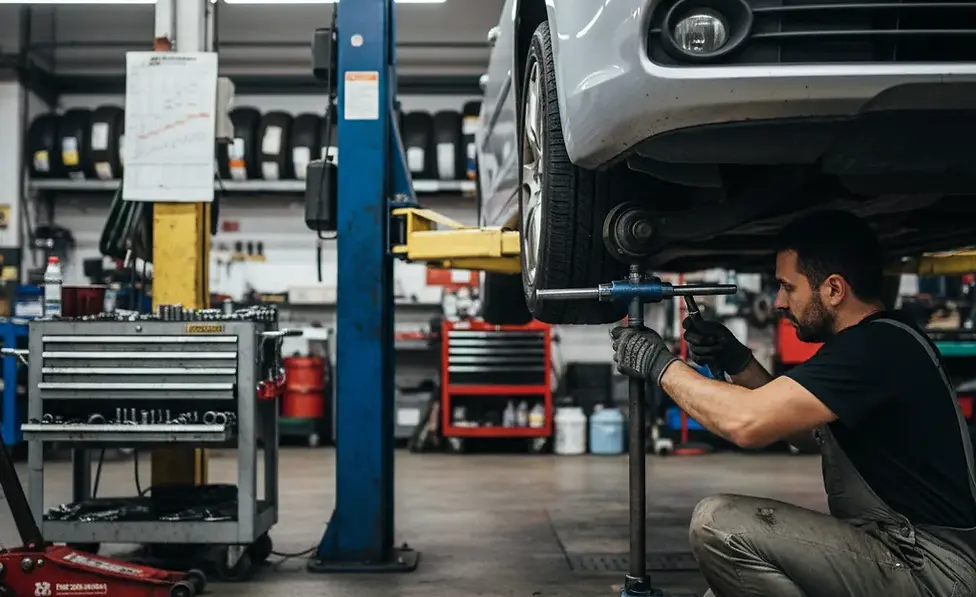
We start by getting the vehicle up on the lift. Once it's in the air, a good technician doesn't just look — they feel. We grab the tire at the top and bottom and try to rock it. Then we grab it at the sides and do the same thing. That movement, that looseness, tells us a lot before we even pull out a tool.
Here's the actual sequence we follow on every ball joint replacement in Hollywood:
-
Lift the vehicle and remove the wheel
-
Inspect the ball joint boot for cracks, tears, or grease leakage
-
Check for play using a pry bar against the control arm
-
Disconnect the ball joint from the steering knuckle using a separator tool
-
Press out the old ball joint using a press tool or pickle fork
-
Press in the new ball joint and torque everything to spec
-
Reassemble the knuckle, reinstall the wheel, and lower the vehicle
That pressing step is where a lot of shops cut corners. We've seen ball joints that were hammered in instead of pressed — sitting crooked, wearing out in months. That's not how we do it.
After the new joint is in, we check alignment. A ball joint replacement almost always shifts your steering geometry, especially on vehicles that come in with pre-existing wear from Hollywood's rough road conditions. Skipping the alignment check after this job is a mistake.
The whole job takes roughly one to two hours on most vehicles. Some trucks with pressed-in joints in tight control arms take longer — that's just honest.
But here's what matters most. When we lower the car back down, it should feel planted. Solid. No clunk when you turn. No wobble at highway speed. If it doesn't feel right, we don't hand you the keys.
That's the standard we hold ourselves to — every time.
The Wheel Alignment Step You Cannot Skip After Replacement
A lot of shops in Hollywood will replace your ball joints and hand you the keys. Done. But here's what they're skipping, and it matters more than most people realize.
Ball joint replacement changes the geometry of your front suspension. The angles shift. Even a small change in how that joint sits affects where your tires point. If we don't realign the wheels after the job, you're going to feel it.
Here's what happens when alignment gets skipped:
-
Your steering pulls left or right on a straight road
-
Tires wear unevenly, sometimes in just a few weeks
-
The car feels loose or wandery, especially over 50 mph
-
You end up burning through brand-new tires faster than you should
-
We see it all the time. Someone comes in saying their car drifts, and when we check it, the alignment is way off. They had suspension work done somewhere else and nobody touched the alignment after.
So what does a proper alignment check after ball joint replacement actually involve? We put the car on our alignment rack and measure the caster, camber, and toe angles on the front end. Those three settings control how your tires contact the road. If any of them are off after the replacement, we adjust them back to your vehicle manufacturer's specs.
It's not optional. It's part of the job.
And it protects the work we just did. New ball joints are built to last, but only if the suspension geometry is correct. Running misaligned puts stress back on those joints and on your tires at the same time. You'd be shortening the life of parts you just paid to replace.
Hollywood roads aren't exactly smooth. Between the stop-and-go on Hollywood Boulevard and the surface conditions in some of the older neighborhoods, your suspension is already working hard. Don't make it harder by skipping this step.
We include an alignment check as part of every ball joint replacement we do. If an adjustment is needed, we tell you before we do it. No surprises.
Alignment isn't optional after this job. Learn why.
Urgent vs. Can Wait: When to Stop Driving Immediately
This is the question we get asked most. And it's the right one to ask.
Ball joints don't always fail the same way. Some give you weeks of warning. Others go fast, and when they go fast, you lose control of the car. That's not a scare tactic. That's just what happens when a joint that connects your wheel to your suspension gives out completely. We see it happen to Hollywood drivers who thought they had more time.
Here's how to read what your car is telling you:
-
Clunking or knocking over bumps — this is early-stage wear, worth scheduling soon
-
Vibration in the steering wheel at highway speed — getting more urgent
-
Tire wearing unevenly on one edge — the joint is affecting your alignment now
-
Steering feels loose or vague, like the wheel has too much play — stop driving and call
-
The car pulls hard to one side with no warning — pull over immediately
That last one isn't a "schedule it this week" situation. That's a tow-truck call. A ball joint that's separating can cause your wheel to fold under the car. On US-1 or Sheridan Street heading through Hollywood, that's a serious accident waiting to happen.
So how do you know which stage you're in? Most people can't tell without putting it on a lift. But here's a rough rule: if the noise started recently and only happens on rough roads, you've probably got time to book an appointment. If the noise is constant, if the steering feels wrong, or if anything changes suddenly, don't drive it.
We've been doing this long enough to know that the cars that come in on a flatbed are usually the ones where someone waited too long. The drivers who call us when they first hear the clunk? They get back on the road faster and spend less doing it.
Not sure where your car falls? Give us a call and describe what you're hearing. We can usually tell you within a few minutes whether it's urgent.

Frequently Asked Questions
How long does ball joint replacement take at your Hollywood shop?
Most ball joint replacements in Hollywood take one to two hours to complete. Straightforward jobs on passenger cars move quickly. Trucks or vehicles with pressed-in joints inside tight control arms can run longer. After the new joint goes in, we also check your alignment before you leave. That step adds a little time but saves you from coming back with uneven tire wear a month later.
Can I keep driving in Hollywood with a bad ball joint?
You should not keep driving on a failed ball joint, especially on Hollywood's busier roads like US-1 or Sheridan Street. A worn ball joint gets sloppier over time. What starts as a clunk becomes loose steering, then uneven tire wear, then a real safety risk. A fully failed ball joint can cause you to lose steering control completely. The longer you wait, the more damage spreads to surrounding parts.
Why do ball joints seem to wear out faster here than in other states?
Hollywood's climate is genuinely harder on ball joints than most places. The heat breaks down grease inside the joint boot faster. Salt air from near Hollywood Beach corrodes exposed metal from the outside. Then heavy rain works into any cracked boot and washes out what lubrication is left. We regularly see vehicles under 60,000 miles come in with ball joints that are already loose and clicking. That's not unusual here.
What does a bad ball joint actually feel like when I'm driving?
The most common thing people describe is a clunking or knocking sound when hitting a bump. You might also notice the steering feels vague or the car drifts when you're trying to go straight. Some drivers feel vibration in the steering wheel at highway speeds. Others notice the front end pulling to one side during braking. If two or three of those things are happening at once, get it checked right away.
Will I need a wheel alignment after ball joint replacement?
Yes, almost always. Replacing a ball joint shifts your steering geometry, even on a vehicle that was aligned recently. Skipping the alignment check after this job is a common mistake at other shops. We include that check on every ball joint replacement we do in Hollywood. Without it, your tires will start wearing unevenly and your steering will feel off, even with a brand-new joint installed correctly.