
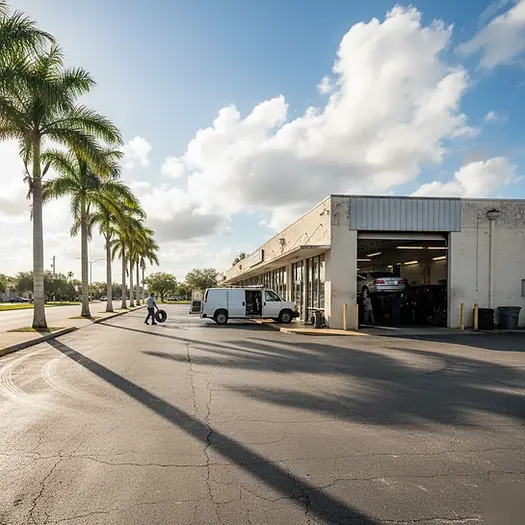
TPMS Service in Hollywood, FL
A warning light, a sensor that won't reset, or a replacement that needs programming — we diagnose the fault, tell you straight what's failing, and handle the repair or replacement correctly. Every service includes a full sensor diagnostic, proper programming to your vehicle's system, and a pressure verification on all four tires. Backed by a 3-year/36,000-mile warranty on parts and labor.
Why Your TPMS Light Is On and What It Actually Means
That little amber light on your dash shaped like a horseshoe with an exclamation point? It's your TPMS warning. And most of the time, it doesn't mean something catastrophic happened.
But you shouldn't ignore it either.
Your Tire Pressure Monitoring System (TPMS) Service light comes on when one or more tires drop below the pressure your vehicle's manufacturer set as safe. Here in Hollywood, we see this spike every winter when temperatures dip overnight. Cold air shrinks, tire pressure drops, the sensor catches it. By afternoon the tires warm up and the light might turn off on its own. That doesn't mean the problem is gone, it means the problem is hiding.
So what actually triggers that light? Several things can do it:
-
A slow leak from a nail, screw, or curb damage picked up driving around Hollywood Boulevard or near the shops off Sunset.
-
Normal air loss over time, roughly one to two PSI per month according to the US Government Accountability Office. [1]
-
A failed or dying TPMS sensor battery inside the tire.
-
A sensor that got damaged during a previous tire change.
-
A spare tire with its own sensor reading low pressure.
Here's what most people get wrong. They assume the light means "flat tire" and nothing else. But a flashing TPMS light is different from a steady one. A steady light means low pressure somewhere. A flashing light that then stays solid means the system itself has a fault, according to NHTSA. [2] The sensor, the receiver, or the communication between them broke down. Two very different problems that need two very different fixes.
We check both scenarios every single day at our shop. Customers from the East Hollywood area drive in thinking they need air, and we find a cracked sensor that's been giving bad readings for months. Others come in sure the whole system is broken when really they just picked up a roofing nail near a construction site off Vine Street. Find out how our auto repair shop in Hollywood, Florida can help you with any of your repair needs. .

The point is this. Your TPMS light is doing its job. It's telling you something has changed. What matters is figuring out the real cause before a minor pressure issue turns into uneven tire wear or a blowout on the freeway.
TPMS Reset vs. TPMS Relearn, They Are Not the Same Service
Most people use these terms like they mean the same thing. They don't.
A TPMS reset clears the warning light on your dash. That's it. It tells the system to start fresh with the current tire pressures. Think of it like restarting your phone. The settings stay the same, you're just clearing a glitch. If your light came on because of a cold snap in Hollywood or because you aired up your tires at a gas station, a simple reset might be all you need.

A TPMS relearn is a completely different process. It teaches your car's computer which sensor belongs to which wheel position. Every TPMS sensor has a unique ID code. When you rotate tires, swap wheels, or replace a sensor, the car needs to know where each one ended up. Without a proper relearn, you could get a low-pressure warning for the front left tire when the actual problem is in the rear right.
When Each One Matters
Here's how to think about it. If nothing changed on your wheels and the light just popped on, you probably need a reset. But if any of these happened, you need a relearn:
-
You had a tire rotation or new tire installation
-
One or more TPMS sensors were replaced
-
You switched between summer and winter wheels
-
A flat tire repair involved removing the tire from the rim
The relearn process varies by vehicle. Some cars near East Hollywood let you do a manual relearn by driving at a set speed. Others need a scan tool that activates each sensor one at a time so the computer can register it. And some newer models require dealer-level software. Our team uses the right tool for each make and model, so the system locks in correctly the first time.
Getting this wrong causes real headaches. Your TPMS light stays on, your readings bounce around, or the system stops alerting you altogether. That last one is a dangerous scenario. You lose the safety net the system was built to give you. If you're not sure which service you actually need, give us a call and we'll sort it out fast.
How Coastal Air and South Florida Heat Shorten Sensor Life
Salt air eats metal. It's what we pull out of wheels every single day here in Hollywood.
TPMS sensors sit inside your wheels, right next to the valve stem. They're small electronic units with batteries, circuit boards, and metal housings. Now think about what they deal with in our area. Ocean moisture rolls in from Hollywood Beach and hangs in the air for hours. That salty humidity creeps into every gap, every thread, every tiny connection point on the sensor. Over time, corrosion builds up on the valve stem and the sensor housing itself. We've seen sensors from cars near the Broadwalk that looked ten years older than they actually were.
And then there's the heat.
TPMS sensors have batteries designed to last roughly seven to ten years. But that estimate assumes moderate conditions. Hollywood pavement in July can hit 150 degrees or more. Your tires absorb that heat, your wheels absorb that heat, and your sensors cook inside them all summer long. Extreme temperatures drain sensor batteries faster and stress the internal electronics. We see sensors failing at four or five years here when they'd last seven or eight up north.
Here's what that looks like for you as a driver. Common signs of heat and corrosion damage include:
-
A TPMS warning light that flashes on startup then stays solid
-
Valve stems that are green or white with corrosion buildup
-
Sensors that stop reporting to your dashboard without warning
-
Intermittent readings that jump around on hot afternoons
Folks who park outdoors near North Beach or along the Intracoastal tend to bring us these problems more often. The combination of direct sun exposure and salt-heavy air is brutal on small electronics. In most cases, the sensor looks fine from the outside. The damage is all internal where corrosion has eaten through a contact point or the battery has swollen from heat cycles.
You can't prevent the weather. But you can stay ahead of it with regular checks. That's why we recommend having your TPMS sensors inspected any time you're already getting tires rotated or replaced — see what our tire shop offers while you're at it.
What Happens to TPMS Sensors During a Flat Tire Repair
Most folks don't think about their TPMS sensor until something goes wrong during a flat tire repair. That's fair. You came in because of the flat, not the sensor.
But here's what actually happens. Every time a tire gets removed from the rim, the TPMS sensor sitting inside is exposed. It's mounted right near the valve stem on most vehicles. One careless move with a tire iron and that sensor cracks, bends, or breaks completely. We see this every single week from shops that rush through flat tire repair jobs.
When our team handles a flat tire repair here in Hollywood, we follow a specific process to protect your sensor:
-
We identify the sensor location before breaking the tire bead.
-
We mark the sensor position so the dismount tool stays clear of it.
-
We inspect the sensor, its seal, and the valve core once the tire is off.
-
We replace the grommet or seal if it shows any wear.
-
We remount the tire, then verify the sensor is transmitting correctly.
Skip any of those steps and you leave with a repaired tire but a dead sensor. Then that TPMS warning light pops back on a day later, you're frustrated, and now you're paying twice.
Here's something people near Hollywood Boulevard and the Walk of Fame area run into a lot. They hit a pothole or pick up a nail, get the flat patched at a quick-lube spot, and come to us a week later because the dash light won't go away. Almost every time it's the same story. The sensor got damaged during removal and nobody checked it.
Can a sensor survive a flat tire repair without any issues? Absolutely. But only if the tech knows it's there and works around it. Older sensors are especially fragile. The battery inside has a limited life, and rough handling can finish it off early.
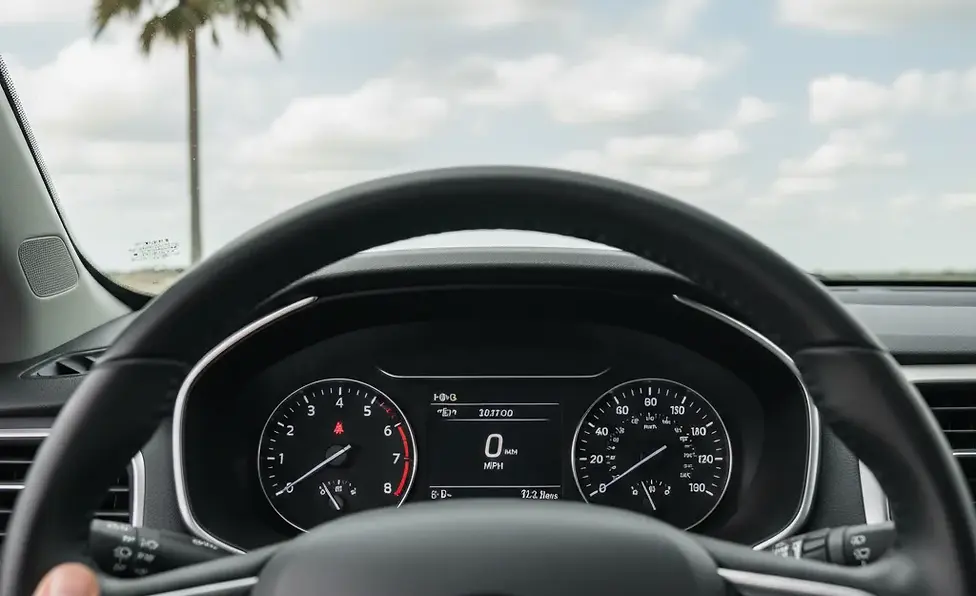
The TPMS Service Process at CM Auto Repair
We don't guess. Every TPMS service starts with a scan, and it ends with a road-ready confirmation. Here's exactly what happens when you bring your car to our Hollywood shop.
-
Full system scan. We plug into your OBD-II port and read every sensor. This tells us which tire position is reporting trouble, whether a sensor has gone silent, or if the module itself has a fault code stored.
-
Physical inspection. We pull each wheel and check the sensor hardware. Valve stems crack. Seals dry out. Battery contacts corrode. We look at all of it.
-
Diagnosis and explanation. Before we touch a single part, we talk to you. We show you what's wrong and explain your options in plain language. No jargon, no pressure.
-
Sensor replacement or repair. If a sensor needs swapping, we match the correct unit to your vehicle's year and make. Then we install it, torque the valve nut to spec, and seat the tire back on the rim.
-
Relearn procedure. This is the step most shops rush through. Each new sensor has to be programmed to your car's computer. Some vehicles need a drive cycle, others need a magnet trigger at each wheel position. We handle whichever protocol your car requires.
-
Final verification. We confirm every tire reads correctly on the dash. No warning light. No flashing icon. Done right.
For most vehicles, the whole process takes under an hour. Folks near Hollywood Boulevard drop the car off on a lunch break and pick it up the same afternoon.
But here's the thing most people don't realize. A sensor that "sort of" works can feed your car bad pressure data for months. You think your tires are fine, they're actually running five PSI low. That eats your tread unevenly and burns more fuel. Our team catches that kind of hidden problem during every service because we verify each sensor's live reading against a calibrated gauge. We don't just clear the light, we make sure the numbers are honest.
Want to get this handled today? Give us a call and we'll get you on the schedule.
Frequently Asked Questions
Why does my TPMS light come on in the morning but turn off by afternoon in Hollywood?
Your TPMS light turns off later in the day because tire pressure rises as your tires warm up. Hollywood nights can get cool enough to drop tire pressure by two or three PSI. The sensor catches that drop and triggers the light. Once the sun heats your tires back up, pressure climbs and the light clears. But the underlying cause — a slow leak or aging sensor — is still there. Don't wait for it to come back.
What is the difference between a TPMS reset and a TPMS relearn?
A TPMS reset just clears the warning light on your dash. A TPMS relearn teaches your car which sensor is on which wheel. If you recently had a tire rotation, new tires, or a sensor replaced, you need a relearn — not just a reset. Skipping the relearn means your car could show a low-pressure warning for the wrong tire. That's a real safety problem. We run the correct process for your specific make and model every time.
How does living near Hollywood Beach affect how long my TPMS sensors last?
Salt air from Hollywood Beach speeds up corrosion on your TPMS sensors and valve stems. Sensors are small electronic units that sit inside your wheel. Ocean moisture works into the metal housing and connections over time. Combined with summer heat that can push pavement temperatures past 150 degrees, sensors here often fail at four or five years instead of the seven or eight you'd see in cooler, drier climates. If your car is parked outdoors near the Broadwalk or the Intracoastal, plan for earlier sensor checks.
What does a flashing TPMS light mean compared to a steady one?
A steady TPMS light means at least one tire has low pressure. A flashing light that then stays solid means the system itself has a fault. Those are two different problems. A steady light might just need air or a reset. A flashing light usually means a sensor failed, a battery died, or communication between the sensor and your car's computer broke down. Driving around Hollywood with a faulty system means you lose the warning you're counting on if a tire starts losing pressure fast.
Do I need to do anything before bringing my car in for TPMS service?
You don't need to prepare much before your visit. Just note whether your TPMS light is steady or flashing and when it first came on. If you recently had tires rotated or replaced anywhere in Hollywood, mention that too. That detail helps us know right away whether you need a reset, a relearn, or a sensor replacement. The more you remember about recent tire work, the faster we can pinpoint the problem and get you back on the road.
Can I drive with my TPMS light on in Hollywood traffic?
You can drive short distances, but you should get it checked the same day. Hollywood traffic on I-95 or US-1 puts real stress on underinflated tires. Low pressure causes uneven wear and raises the risk of a blowout at highway speeds. A steady light might mean you're only a few PSI low, but you won't know which tire or how bad without checking. Don't assume it will go away on its own. A quick inspection tells you exactly what you're dealing with.
Citations
[1] https://www.gao.gov/products/gao-07-246r
[2] NHTSA. *Tires.* https://www.nhtsa.gov/vehicle-safety/tires