

Timing Belt Replacement in Hollywood, FL
Protect your engine with expert timing belt replacement in Hollywood, FL from CM Auto Repair. A worn or damaged timing belt can lead to serious engine problems if left unchecked. Our skilled technicians provide accurate inspections, timely replacements, and dependable service for all vehicle makes and models. We use quality components and manufacturer-recommended procedures to keep your engine synchronized, improve reliability, and help you avoid expensive repairs down the road.
What Timing Belt Replacement Actually Involves
This isn't a quick fix. Timing belt replacement is one of the more involved jobs we do at our Hollywood shop, and there's a good reason most people don't try it at home.
The timing belt sits deep inside your engine. It connects the crankshaft to the camshaft and keeps your valves opening and closing at exactly the right moment. When that belt snaps or slips, valves can collide with pistons, that's catastrophic engine damage. So getting this right matters more than almost any other repair under your hood.
The Step-by-Step Process
Every engine layout is a little different, but here's what a typical timing belt replacement looks like in our bays:
-
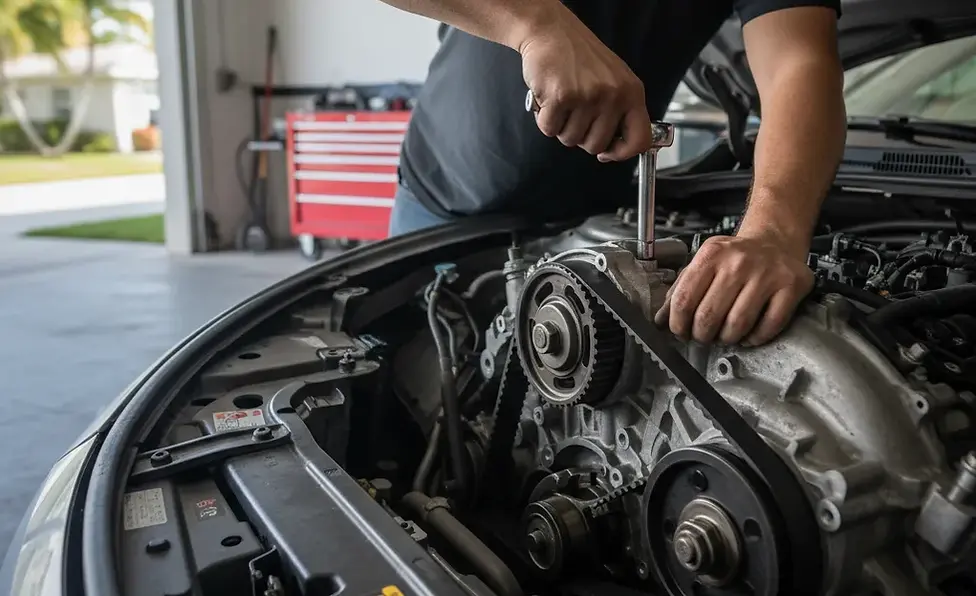
We remove the engine covers, accessories, and mounting brackets blocking access to the timing cover.
-
We mark the timing positions on the crankshaft and camshaft sprockets before touching anything.
-
The old belt comes off along with the tensioner and any idler pulleys.
-
We inspect the water pump since it's right there and often due for replacement at the same mileage.
-
New belt goes on, tensioner gets set to spec, and we rotate the engine by hand to verify alignment.
-
Everything gets reassembled, torqued properly, and tested.
That hand-rotation step? We never skip it. When we hear about a botched timing belt job from another shop, it’s common that somebody skipped that verification. The engine fired up with the timing off by a tooth. Bad news.
The whole job can take three to five hours depending on your vehicle. Some cars bury the timing belt behind the motor mount, the power steering pump, even the AC compressor. We've pulled apart Honda Accords that took half the morning just to reach the belt. We do this work every week, so the shortcuts that save time without cutting corners.
And here's something most people don't realize. We replace the tensioner and idler pulleys at the same time. Installing a fresh belt on worn pulleys is like putting new tires on bent rims, it defeats the purpose.

Warning Signs Your Timing Belt Is Failing
Most people don't think about their timing belt until something goes wrong. That's fair. It's hidden under a cover, doing its job quietly. But when it starts to wear out, your car will tell you.
You just have to know what to listen for.
Here are the most common signs we see at our Hollywood shop, week after week:
-
A ticking or clicking noise from the engine. This often means the belt is loose or the tensioner is wearing down. It's usually louder at idle.
-
The engine misfires or runs rough. A worn belt can slip on the camshaft, throwing off your engine's timing. You'll feel it as a stutter or hesitation.
-
Your car won't start at all. If the belt snaps, the engine can't turn over. Period. This is the worst-case scenario, and we see it more than we'd like.
-
Oil leaking near the front of the engine. The timing belt cover has gaskets that dry out over time. Oil around that area is a red flag.
-
A high-pitched squeal on startup. People confuse this with a serpentine belt issue. When it's paired with rough running, it's the timing belt.
Here's what catches a lot of Hollywood drivers off guard. There's sometimes no warning at all. Rubber degrades with heat and age, and South Florida temperatures speed that process up. A belt can look fine from the outside and be cracking apart on the tooth side.
We had a customer last month drive in for an oil change. No complaints, no noises. But during our digital vehicle inspection, we spotted heavy fraying on the belt. Another few hundred miles and that engine would've been done.
So if your car has over 60,000 miles and you've never had the belt checked, don't wait for a symptom. According to the Gates Corporation, timing belt failure is a common cause of non-collision engine damage [1]. And by the time you hear something, you're already behind.
Not sure if what you're hearing is the timing belt or something else? We can sort it out fast. Find out more about our services in our auto repair shop.
When to Replace, Mileage, Age, and South Florida Heat
Most manufacturers say to replace your timing belt between 60,000 and 100,000 miles. That's the general rule. But here in Hollywood, that number shrinks fast.
South Florida heat does real damage to rubber. Your timing belt sits inside the engine, absorbing heat every time you drive. Add our year-round humidity and stop-and-go traffic along US-1 or Federal Highway, and that belt ages quicker than the odometer suggests. We've pulled belts at 55,000 miles that looked worse than belts we've seen at 80,000 in cooler climates. According to the Gates Corporation, for every internal temperature increase of 18*F, the overall service life of the belt can be cut in half. It's not just mileage, it's conditions.
So how do you know when it's time? Watch for these signals:
-
Your mileage is approaching 60,000 and you've never had the belt changed
-
The vehicle is over seven years old regardless of miles driven
-
You hear a high-pitched ticking or slapping from the front of the engine
-
Your engine misfires or struggles to start on hot mornings
That last one catches people off guard. A car that sits in a Hollywood driveway baking in 95-degree heat all afternoon puts stress on the belt even when it's not running. Rubber dries out. Cracks form along the teeth. Once those teeth start to wear, the belt can skip or snap without warning.
The customer who comes in with a snapped belt almost always tells us they had no idea it needed replacing. A worn timing belt doesn't throw a warning light. It just fails. One morning your car starts fine, the next morning it doesn't, or worse, it fails while you're driving down Hollywood Boulevard.
Age matters just as much as mileage here. We see plenty of cars with only 40,000 miles that are eight or nine years old. The belt still needs to go. Rubber doesn't care that you drove less, it still breaks down over time. If you're not sure where you stand, we can check it during a digital vehicle inspection and give you a straight answer.
The Timing Belt Replacement Process at CM Auto Repair
We don't rush this job. A timing belt replacement takes real focus because one wrong move can cost you an engine. Here's exactly what happens when you bring your car to our shop on Pembroke Road.
Our process follows a clear order every time:
-
We start with a full visual check of the timing belt cover area, looking for oil leaks or coolant drips that could damage a new belt fast.
-
We remove the accessory belts, engine covers, and mounting brackets to reach the timing belt itself. On some cars this means pulling the motor mount, we support the engine from below.
-
We mark the camshaft and crankshaft positions before anything comes apart. This is the step that matters most. Get it wrong and the valves hit the pistons.
-
The old belt comes off along with the tensioner and idler pulleys. We replace all of them together because a failed tensioner will destroy a new belt in weeks.
-
We install the new timing belt, verify every alignment mark twice, then rotate the engine by hand through two full cycles before we start it.
-
Once it fires up we listen, check timing with a scan tool, and confirm there are no codes or misfires.
That hand rotation step? Most shops skip it. We've caught misaligned timing marks that way more than once. It takes five extra minutes and saves you from a catastrophic failure on the road.
We also replace the water pump during this job. It sits right behind the timing belt on most engines. The labor to reach it is already done, so it makes no sense to leave an aging pump in place and pay for the same teardown again in a year.
The whole process usually takes three to five hours depending on the vehicle. Some Hollywood customers drop off in the morning and pick up the same afternoon. Others with more complex engines need a full day. We'll tell you the timeline before we touch anything.
Why Skipping the Water Pump Is a Costly Mistake
Here's something we tell every customer who comes in for a timing belt replacement. Replace the water pump at the same time.
We're not saying that to pad the bill. The water pump sits right behind the timing belt on most engines. To get to it, we've already done 90% of the labor. If you skip the water pump now and it fails in a year, you're paying for all that labor again. We see this happen more than you'd think at our Hollywood shop.

What Actually Happens When the Water Pump Fails
The water pump keeps coolant moving through your engine. When it goes, your engine overheats fast. Warped heads, blown gaskets, sometimes a cracked block. That turns a straightforward job into a major engine repair, and none of that needs to happen.
The water pump and timing belt wear at roughly the same rate. Most water pumps are designed to last around the same 60,000 to 100,000 miles. So if your belt is due, your pump is probably close behind.
We've had customers drive away after a timing belt replacement, skip the water pump, then come back eight months later with coolant pouring out. The pump seal gave up. Now they're paying for the same teardown twice. That's money nobody wants to spend.
Here are the signs a water pump is already on its way out:
-
Small coolant puddles under the front of your car
-
A whining or grinding noise from the engine area
-
Temperature gauge creeping higher than normal
-
Visible corrosion or weeping around the pump housing
But sometimes there are zero warning signs. The pump just quits one day. That's why we always recommend doing both together during a timing belt replacement, it's the smart call. The logic is simple: you're already in there, the part is exposed, and the pump has the same miles on it. Skipping it to save a little now almost always costs more later.
check out our auto repair shop in Hollywood, FL, for everything we handle.
Frequently Asked Questions
How do I know if my timing belt needs to be replaced soon?
A ticking or clicking noise from the engine is one of the clearest signs your timing belt is wearing out. You might also notice rough running, misfires, or trouble starting on hot mornings. But here's the honest truth — sometimes there's no warning at all. In Hollywood, the heat and humidity break down rubber faster than the mileage suggests. If your car has over 60,000 miles and you've never had the belt checked, don't wait for a symptom to show up.
Does Hollywood's heat really affect how often I need to replace my timing belt?
Yes, and it makes a bigger difference than most people expect. South Florida heat breaks down rubber faster than cooler climates. We've pulled belts at 55,000 miles here in Hollywood that looked worse than belts we've seen at 80,000 miles up north. A car sitting in a Hollywood driveway in 95-degree heat puts stress on the belt even when it's not running. Age matters just as much as mileage — if your belt is over seven years old, it's time to have it looked at.
How long does a timing belt replacement take at your shop?
Most timing belt replacements take three to five hours from start to finish. The time depends on your specific vehicle. Some cars bury the belt behind the motor mount or AC compressor, which adds time just to reach it. We never skip the hand-rotation verification step at the end — that's how we confirm the timing is set correctly before we button everything back up. Plan to leave your car with us for the day and we'll have it back to you running right.
Do you replace anything else during a timing belt job?
We almost always replace the tensioner and idler pulleys at the same time as the belt. Installing a new belt on worn pulleys is like putting new tires on bent rims — it defeats the purpose. We also inspect the water pump since it sits right there and is often due for replacement at the same mileage. Doing it all at once saves you from pulling the engine apart again in another year. It's the smarter way to do the job.
What happens if I wait too long and the timing belt snaps?
If the belt snaps, your engine stops turning over and your car won't start at all. In many engines, a snapped belt causes the valves to collide with the pistons — that's catastrophic engine damage that can cost far more than a belt replacement. We see this happen to Hollywood drivers who had no idea the belt was due. A worn timing belt doesn't trigger a warning light. It just fails. Catching it early is the only way to avoid a much bigger repair bill.
Can I drive my car to your shop if I think the timing belt is going bad?
If you're hearing a ticking noise or the engine is running rough, call us before you drive anywhere. We can help you figure out if it's safe to bring it in or if you need a tow. Driving on a belt that's close to failure is a real risk — especially on busy roads like US-1 or Hollywood Boulevard where a breakdown puts you in a tough spot. A quick phone call can save you from a much more expensive situation.