

OBD-II Diagnostic Scan in Hollywood, FL | CM Auto Repair
Accurate diagnostics are the first step toward finding and fixing vehicle problems efficiently. At CM Auto Repair in Hollywood, FL, our OBD II diagnostic scan service uses advanced scanning technology to identify issues with your vehicle’s engine, transmission, emissions, and other electronic systems. Our experienced technicians analyze diagnostic trouble codes, perform detailed evaluations, and provide clear recommendations for the necessary repairs. Whether your check engine light is on, your vehicle is experiencing performance issues, or you need a system check, our OBD II diagnostics help ensure your vehicle receives the right solution.
What an OBD-II Diagnostic Scan Actually Tells You
A lot of people think the scan just reads the check engine light. It does way more than that.
Your car's OBD-II system is basically a built-in reporter. It monitors dozens of systems at once and logs fault codes every time something falls outside normal range. When we plug in our scan tool here in Hollywood, we're pulling that entire log, not just the one code that lit up your dashboard.
Here's what we actually see when we run an OBD-II diagnostic scan:
-
Diagnostic trouble codes (DTCs) for engine, transmission, and emissions systems
-
Pending codes that haven't triggered a warning light yet
-
Live sensor data including oxygen sensor readings, fuel trim values, and coolant temp
-
Freeze frame data showing exactly what your engine was doing when a fault occurred
-
Readiness monitors that tell us if your emissions systems have completed their self-checks
That freeze frame data is something most people don't know about. When a fault code trips, your car takes a snapshot: RPM, vehicle speed, engine load, fuel pressure. We can see what was happening at the exact moment something went wrong, and that's often the difference between a quick fix and a week of guessing.
Customers come in from the Oakwood area with a P0420 code and assume it's an expensive catalytic converter job. But the live O2 sensor data tells a different story. Sometimes it's a bad sensor. Sometimes it's an exhaust leak. The code is a starting point, not a final answer.
And that's the honest truth about OBD-II diagnostic scans. The code tells you where to look. Our job is to figure out why.
Pending codes are worth paying attention to. They haven't turned on a light yet, but they're building toward one. Catching them early in Hollywood's stop-and-go traffic can save you from a breakdown you didn't see coming.
The OBD-II standard was federally mandated for all vehicles sold in the United States after 1996, which is why every modern car you bring into our shop is compatible with the same diagnostic interface — you can learn more about how the system works in this excellent guide to OBD-II from CSS Electronics, a worldwide leader in vehicle electronics [1].
The scan gives us data. Experience tells us what it means. Explore more about the services our skilled mechanics provide.

Warning Signs That Mean You Need a Scan Now
That little orange light on your dashboard isn't just decoration. When your check engine light comes on, your car's computer has already logged a fault code, and an OBD-II diagnostic scan is the only way to know what it's actually saying.
But the check engine light isn't the only sign. Cars come into our Hollywood shop every week where the driver waited too long because they didn't recognize what they were looking at.
Here's what should send you straight to us:
-
Check engine light is on, solid or flashing
-
Your car failed a Florida emissions inspection
-
Rough idle, stuttering, or hesitation when you accelerate
-
Sudden drop in fuel economy you can't explain
-
Transmission shifting hard or at the wrong times
-
The TPMS warning light stays on after you've checked your tires
A flashing check engine light is a different animal. That's not a "get it looked at this week" situation. That's a misfire happening right now, and driving on it risks damaging your catalytic converter. Don't wait on that one.
So what about the car that feels totally fine but the light is on? That's actually a very common thing we see. The driver says "it drives normal though." And it might. But the code is there for a reason, and ignoring it means you're flying blind on whatever system triggered it.
Down in the Oakridge area, we get a lot of older vehicles where multiple codes have been sitting in the system for months. The owner didn't notice anything wrong. The car just quietly logged problem after problem until something finally gave out.
That's the real risk. Not the light itself. The fact that you don't know what's behind it.
If your car is showing any of these signs in Hollywood, don't guess. An OBD-II diagnostic scan takes the guesswork out completely. Our licensed technicians pull the codes, explain exactly what they mean, and tell you what needs attention now versus what can wait. You leave knowing, not wondering.
Need help figuring this out? Get started with our knowledgeable Auto Repair Shop team today.
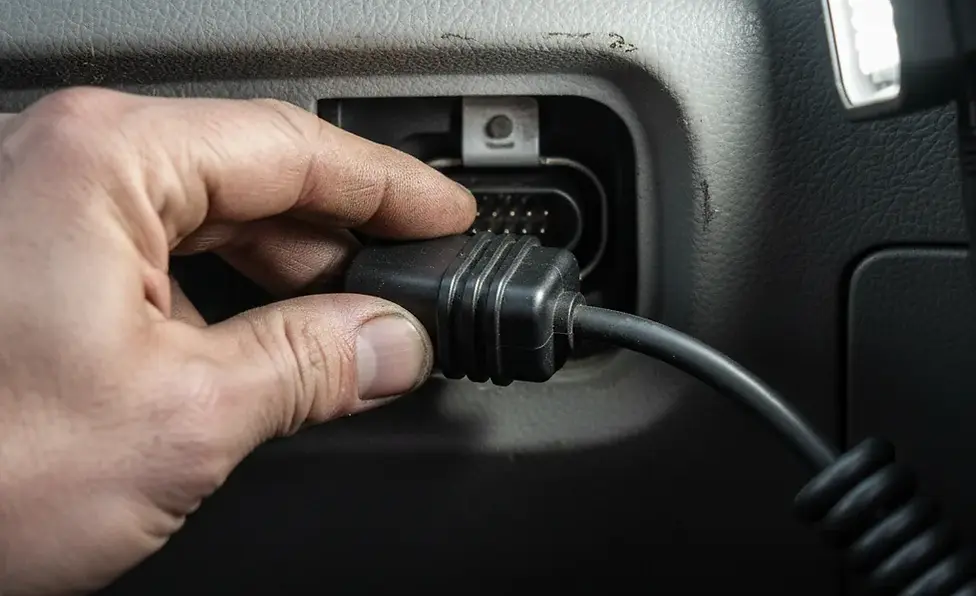
Step-by-Step: What Happens During a Professional Scan
A lot of customers pull into our shop in Hollywood expecting us to just plug something in and hand them a piece of paper. It's actually more involved than that, and understanding the process helps you make sense of what we find.
Here's exactly what we do, in order:
-
Connect the scan tool to your OBD-II port. Every car made after 1996 has one. It's usually under the dash on the driver's side. We plug in directly and let the tool establish communication with your vehicle's computer.
-
Pull all stored and pending codes. Your car's system logs both active faults and codes that haven't fully triggered yet. We read both. Pending codes matter, and most shops miss them.
-
Review live data streams. This is where experience counts. We look at real-time readings from your oxygen sensors, throttle position, coolant temp, and fuel trims. Numbers that look fine in isolation can tell a different story together.
-
Cross-reference the codes with symptoms. A P0420 code on a Civic near the Oakwood area could mean a bad catalytic converter, or it could mean a failing oxygen sensor. The code points us in a direction. It doesn't hand us the answer.
-
Document everything and walk you through it. We write it all down. You get a clear explanation of what the codes mean, what caused them, and what needs to happen next.
Three codes on a screen doesn't always mean three separate repairs. Half the time, one root cause is triggering all of them. That's why the live data review matters so much.
The scan itself takes about 20 to 30 minutes when done right. Rushing it means missing the pending codes or skipping the data review, and that's how you end up fixing the wrong thing.
Our team has been doing this in Hollywood long enough to know which codes are common on which vehicles. That pattern recognition speeds up the diagnosis without cutting corners on accuracy.
Why a Free Code Read Is Not a Professional Diagnostic
A lot of shops in Hollywood will read your codes for free. And we get it, that sounds helpful. But here's what they're actually giving you: a number. Just a code. P0420, P0300, P0171. That's it.
A code tells you a system flagged a problem. It does not tell you why. And that "why" is everything.
Take P0300, which is a random misfire code. The cause is almost never the same twice. It could be a bad ignition coil, a clogged fuel injector, a vacuum leak, low compression, or a failing crankshaft position sensor. If someone hands you that code and says "you need new spark plugs," they're guessing. They're not diagnosing.
A professional OBD-II diagnostic scan goes way beyond pulling codes. Our licensed technicians use the live data stream from your vehicle's computer, things like fuel trim readings, oxygen sensor response times, and misfire counters, to track down what's causing the fault. That's a completely different process than reading a number off a scanner.
Here's a real scenario we run into constantly in the West Hollywood area. A customer comes in after a free code read somewhere else. They were told it was an oxygen sensor. They paid to have it replaced. Check engine light came back on within two days. The real problem was a small exhaust leak upstream, and nobody looked past the code to find it. Now they're paying twice.
The difference between a code read and a real OBD-II diagnostic scan comes down to this:
-
A code read gives you a fault code and nothing else
-
A scan with live data shows how systems are actually performing in real time
-
A full diagnostic traces the fault to its actual root cause
So if someone offers you a free code read, it's not worthless. But don't let it replace a real diagnosis. In Hollywood's stop-and-go traffic, small problems compound fast, and guessing at the fix costs more than doing it right the first time.
Pre-Purchase Scans and Seasonal Vehicle Checks in Hollywood
You found a used car you like. The price looks right, the exterior's clean, and the seller seems honest. But a clean exterior tells you nothing about what's happening inside that engine.
An OBD-II diagnostic scan before you buy a used vehicle is one of the smartest moves you can make. We run these scans for Hollywood drivers all the time, and what we find surprises people. Codes that were recently cleared to hide a problem. Pending faults that haven't triggered the check engine light yet. Emissions monitors that were reset right before the sale. A seller can erase codes. They can't erase the underlying problem.
Here's what a pre-purchase OBD-II diagnostic scan typically catches:
-
Cleared codes that are already returning in the background
-
Pending codes that haven't tripped the warning light yet
-
Incomplete readiness monitors that signal recent battery disconnect or code clearing
-
Live data showing misfires, fuel trim problems, or sensor irregularities
That last one matters more than most people realize. Live data doesn't lie.
Seasonal checks are a different animal, but just as important out here. Hollywood's heat is no joke, and summer puts serious stress on cooling systems, batteries, and sensors. We see a spike in electrical system issues every July, right when temperatures peak around Oakwood and Hollywood Hills. An OBD-II diagnostic scan before summer or before a long road trip gives you a real picture of what's stressed and what's about to fail.
A scan takes less than an hour. A blown head gasket or a failed transmission takes weeks and costs a lot more.
Need a pre-purchase scan or a seasonal check before the heat hits? Give us a call and we'll get you in fast.
We've caught major engine issues on vehicles that looked perfect on the lot. We've also cleared Hollywood customers of unnecessary worry when a scan showed everything was solid. Either way, you leave knowing the truth about your vehicle, and that's exactly where you want to be before you sign anything or head into a new season.

Frequently Asked Questions
How long does an OBD-II diagnostic scan actually take at your shop?
A proper scan takes about 20 to 30 minutes when done right. That includes pulling stored and pending codes, reviewing live sensor data, and walking you through what we found. A quick plug-and-print takes five minutes, but you'll miss the pending codes and the live data review. Those are the parts that tell us why the code is there, not just that it exists. Rushing the process is how people end up fixing the wrong thing first.
My check engine light is on but the car drives fine — do I still need a scan?
Yes, and this is the most common situation we see in Hollywood. A car that drives normally can still have active fault codes quietly building in the background. Your vehicle logs problems even when you don't feel anything yet. Pending codes are especially tricky — they haven't triggered a warning light, but they're heading that way. Hollywood's stop-and-go traffic on US-1 puts real stress on emissions and fuel systems, and those pending codes can turn into breakdowns faster than you'd expect.
What should I bring or do before coming in for a scan?
Just bring your car and know roughly when the light came on. If you noticed anything specific — a rough idle, hard shifting, or a drop in fuel economy — write it down or tell us when you arrive. That context helps us match your symptoms to what the data shows. You don't need to clear the codes beforehand or do anything special. Clearing codes before a scan actually erases the freeze frame data, which is some of the most useful information we have.
Can a P0420 code really mean something other than a bad catalytic converter?
Absolutely, and we see this constantly with customers coming in from the Oakwood area. A P0420 points to catalyst efficiency below threshold — but the cause could be a failing oxygen sensor, a small exhaust leak, or even a fuel mixture problem. The code tells us where to look, not what to replace. That's exactly why we review live O2 sensor data during every scan. Replacing a catalytic converter when the real problem is a bad sensor is an expensive mistake we help you avoid.
Is there anything about Hollywood's climate that affects how often I should get a scan?
Hollywood's heat and humidity put extra strain on sensors, fuel systems, and emissions components. High temperatures affect fuel trim readings and can accelerate wear on oxygen sensors. If you're driving older vehicles or logging a lot of miles in South Florida heat, getting a scan at the first sign of a warning light — rather than waiting — makes a real difference. Catching a pending code early costs far less than dealing with a system that's been running wrong for months.
What happens after the scan — do you fix it the same day?
After the scan, we give you a clear written summary of every code, what it means, and what needs attention now versus what can wait. From there, the repair decision is yours. Some issues can be addressed the same day depending on parts availability and shop schedule. Others may need a follow-up appointment. You leave the scan knowing exactly what's going on — no guessing, no pressure. We tell you what we found and let you decide how to move forward.