

Multi-Point Vehicle Inspection in Hollywood, FL | CM Auto Repair
A thorough vehicle inspection helps identify potential issues before they turn into costly repairs. At CM Auto Repair in Hollywood, FL, our multi-point vehicle inspection service provides a complete evaluation of your vehicle’s essential systems, including brakes, tires, fluids, engine components, suspension, and more. Our skilled technicians carefully inspect every detail, provide accurate recommendations, and help you understand your vehicle’s current condition. Whether you’re preparing for a road trip, buying a used vehicle, or maintaining your car’s performance, our detailed inspections help keep your vehicle safe and reliable.
What a Multi-Point Vehicle Inspection Actually Covers
Most people think it's just a quick look under the hood. It's not.
A multi-point vehicle inspection is a structured check of every major system on your car. We're talking brakes, tires, suspension, fluids, belts, lights, battery, steering, all of it, worked through in a specific order so nothing gets missed. We do these every day in Hollywood, and the number of cars that come in "running fine" but hiding a real problem would surprise you.
Here's what our technicians actually go through:
-
Brake pads, rotors, and calipers, thickness, wear pattern, fluid condition
-
Tires, tread depth, pressure, uneven wear that points to alignment issues
-
Belts and hoses, serpentine belt condition, coolant hoses for cracks or softness
-
Fluid levels, oil, coolant, brake fluid, power steering fluid, transmission fluid
-
Battery and charging system, voltage, terminal corrosion, alternator output
-
Suspension and steering, ball joints, tie rods, shocks, and struts for play or wear
-
Lights and electrical, all exterior lights, dashboard warning indicators
The thing that eventually strands someone on the side of the road was already showing signs weeks earlier. A soft brake pedal. A belt that's starting to crack. A battery sitting at 11.8 volts instead of 12.6.
We catch those things before they become a tow truck call.
Customers in the Oakwood area come in all the time saying their car "feels a little off." No warning light. No obvious noise. But something's not right. That's exactly the kind of thing a multi-point vehicle inspection is built for, putting real eyes on every system so you know what you're actually dealing with.
The results aren't just a verbal rundown. You get a written report. Every item checked, every finding noted. Green means good, yellow means watch it, red means it needs attention now. No guessing, no vague answers, just a clear picture of where your car stands today.
That clarity is the whole point.

Why Florida's Climate Makes This Inspection More Urgent Than You Think
Hollywood sits in one of the harshest environments a vehicle can live in. Heat, humidity, salt air from the coast, and afternoon downpours that come out of nowhere, your car takes a beating here that drivers in other parts of the country just don't deal with.
We see it every week. A customer comes in thinking everything's fine, and we find rubber that's cracked from UV exposure, brake fluid that's absorbed moisture from the humid air, or a battery that's been quietly dying in the heat for months. None of that shows up until it does, usually at the worst possible time.
Florida heat is hard on everything under the hood. Coolant breaks down faster. Belts and hoses dry out and crack sooner than the manufacturer's schedule assumes. And because Hollywood gets real salt air from the ocean side, corrosion on brake components and exhaust parts moves quicker than it would inland. That's not a scare tactic, it's just what we see on cars that live here year-round.
Here's what the climate specifically accelerates on local vehicles:
-
Battery failure, heat kills batteries faster than cold does, and South Florida summers are brutal on them
-
Rubber degradation, hoses, belts, and seals dry out and crack under constant UV and heat exposure
-
Brake fluid moisture absorption, humidity works into the system over time and lowers your boiling point
-
Undercarriage corrosion, especially on vehicles driven near the beach areas of Hollywood
A multi-point vehicle inspection catches all of this before it strands you. Our licensed technicians check these climate-specific wear points as part of every inspection we do. And because we work on cars in Hollywood daily, exactly what to look for on vehicles that live in this zip code.
The inspection schedule in your owner's manual was written for average conditions. Hollywood isn't average. Bumping up your inspection frequency makes real sense here, and it's one of the simplest ways to stay ahead of repairs that cost a lot more than the inspection itself. This article from Consumer Reports highlights the importance of having an inspection from a trusted and reliable mechanic [1].
Seasonal and Snowbird Vehicles Need a Check Before You Drive Again
We see this every year. A car sits in a driveway in Hollywood for four, five, sometimes six months while the owner is up north. Then they come back, turn the key, and assume everything's fine because it started. Starting is not the same as safe.
A vehicle that's been sitting is a different animal than one that's been driven regularly. Fluids settle and degrade. Rubber dries out. Brake rotors develop surface rust. Tires lose pressure and can develop flat spots from sitting on hot pavement through a Florida summer. None of that shows up until you're already on the road.
Here's what tends to go wrong after a long sit, especially in the heat and humidity we get near areas like West Lake and the Hollywood Hills neighborhoods:
-
Brake pads and rotors with rust buildup that won't clear on its own
-
Battery voltage that's dropped too low to be reliable
-
Tire pressure that's shifted from temperature swings
-
Belts and hoses that dried or cracked without anyone noticing
A multi-point vehicle inspection catches all of this before it becomes a problem on US-1 or I-95 during rush hour.
The inspection goes through every major system. Brakes, tires, battery, belts, fluids, lights, suspension. We check what we can see and what we can test. If something looks off, we tell you exactly what it is and what it means. No pressure. Just facts.
A lot of snowbird customers in Hollywood come to us right after they land. They drop the car off, we do the inspection, and they drive out knowing the vehicle is actually ready. That peace of mind matters, especially when you haven't touched the car in months.
Don't assume sitting means nothing has changed. It usually means a lot has changed. Let us look it over first. Find out how our mechanics in Hollywood, Florida, are ready to help you.
What Happens During the Inspection, Step by Step
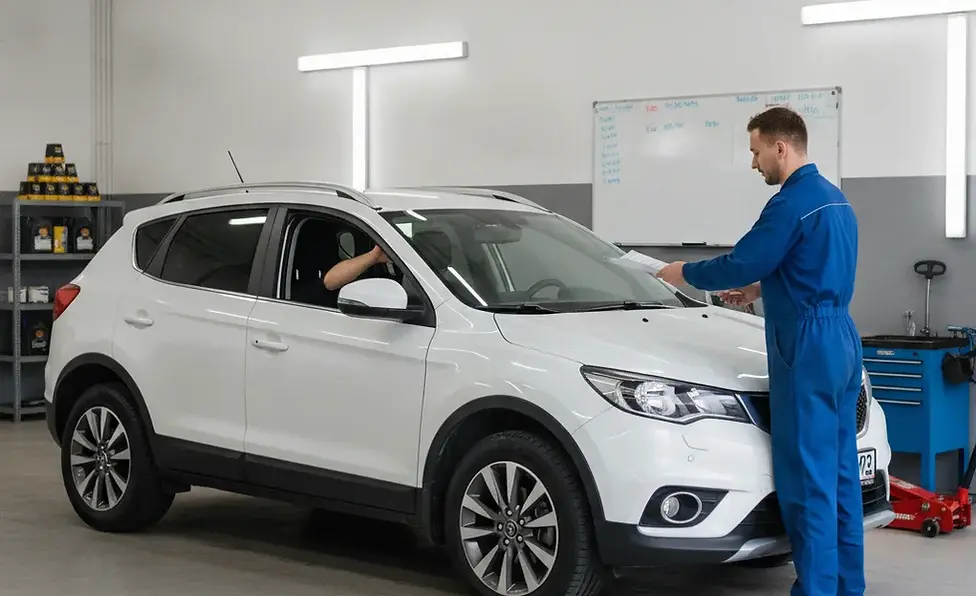
A lot of customers come in not knowing what we actually do during a multi-point vehicle inspection. Fair enough. So here's exactly what happens when your car comes into our shop in Hollywood.
We don't just glance at things and hand you a paper. Every inspection follows a specific sequence, and we work through it the same way every time.
-
Check-in and mileage log. We record your current mileage and any concerns you've mentioned. If you heard something odd on the 101 or noticed a pull when braking near Sunset, we write it down before we touch the car.
-
Under-hood inspection. We look at belts, hoses, the battery, fluid levels, and the coolant reservoir. We check the serpentine belt for cracking and the coolant for contamination. Takes maybe ten minutes but catches a lot.
-
Brake system check. We pull the wheels and measure pad thickness. We also look at the rotors for scoring or heat warping and check the brake fluid condition.
-
Tire inspection. Tread depth, sidewall condition, and inflation pressure on all four tires. We also check for uneven wear patterns, which usually tells us something about alignment or suspension.
-
Lights and electrical. Headlights, brake lights, turn signals, and the battery voltage. Electrical problems are easy to miss until they strand you.
-
Undercarriage and suspension. We put the car on the lift and look at the CV axles, exhaust, shocks, struts, and steering components. Customers from the Oakwood area are sometimes surprised how much road debris ends up underneath their vehicles.
-
OBD-II scan. We plug into the diagnostic port and pull any stored codes, even ones that haven't triggered your check engine light yet.
After all of that, we put together a clear summary of what we found. Green means good. Yellow means watch it. Red means it needs attention now.
We show you the actual findings. Not just a checklist. If something looks worn, we'll show you before we explain it.
The inspection itself doesn't commit you to anything. You get the information, and then you decide what comes next. That's how it should work.
The Right Time to Schedule a Multi-Point Inspection in Hollywood
Timing matters more than most people realize.
A lot of Hollywood drivers wait until something feels wrong before they come in. By then, a small issue has usually turned into a bigger one. We see it constantly, a belt that needed attention three months ago is now leaving someone stranded on Taft Street at 7 in the morning.
So when should you actually book a multi-point vehicle inspection? There are a few situations where it makes real sense:
-
You're coming up on 30,000, 60,000, or 90,000 miles
-
You just bought a used vehicle and want to know what you actually have
-
Your car's been sitting for a month or more without being driven
-
You're heading into a long road trip and want peace of mind before you go
-
Something feels slightly off, a sound, a pull, a smell, but nothing's lit up yet
That last one is worth pausing on. Your dashboard warning light is not the starting line. It's already late. An inspection catches the stuff that hasn't failed yet but is heading that direction fast.
Hollywood's climate plays into this more than people think. The heat down here is hard on rubber, hard on fluids, and hard on cooling systems. We're not in a mild climate. Hoses, belts, and AC components take a beating from May through October, and then drivers wonder why things go sideways in the summer.
If you live near the Young Circle area and you're doing a lot of stop-and-go driving, your brakes and transmission are working harder than someone logging mostly highway miles. That kind of driving pattern accelerates wear in ways that aren't always obvious from the outside.
Once a year is a reasonable baseline for most vehicles. Higher mileage cars, older models, and anything that's been skipping maintenance deserve a look more often than that.
Don't wait for a warning light to make the call, it's almost always cheaper to catch something early. Start by contacting our auto repair shop in Hollywood today.

Frequently Asked Questions
How long does a multi-point vehicle inspection take in Hollywood?
Most multi-point vehicle inspections take about 45 minutes to an hour. That gives our technicians enough time to work through every system properly — brakes, tires, fluids, battery, belts, suspension, and lights. If we find something that needs a closer look, we'll let you know before it adds time. You'll leave with a written report, not just a verbal summary, so you have something to refer back to.
Do I need a multi-point inspection if my check engine light isn't on?
Yes — most problems don't trigger a warning light until they're already serious. A battery sitting at low voltage, a belt starting to crack, or brake fluid that's absorbed moisture won't set off any dashboard alerts. We see this constantly with cars in Hollywood. The light is a last resort. A multi-point inspection catches problems while they're still small and before they turn into a roadside emergency.
My car sat in the driveway all summer while I was up north — is an inspection really necessary?
It really is. A car that's been sitting in Hollywood's heat and humidity for months is not the same car you parked. Brake rotors develop rust. Tires lose pressure and can flat-spot on hot pavement. Belts and hoses dry out. Battery voltage drops. Starting the car doesn't mean it's safe to drive. A multi-point inspection goes through every system so you know what actually changed while the vehicle was sitting.
How does Hollywood's salt air and humidity affect what you look for during an inspection?
It changes quite a bit. Vehicles near the beach areas of Hollywood corrode faster underneath — brake components, exhaust parts, and suspension hardware all take a hit from salt air. Humidity also works into your brake fluid over time, lowering its boiling point. We check these climate-specific wear points on every inspection because what holds up in a dry climate often doesn't hold up here. Your owner's manual schedule wasn't written for South Florida conditions.
What do I get at the end of the inspection?
You get a written report that covers every item we checked. Each system is marked green, yellow, or red — green means it's good, yellow means keep an eye on it, red means it needs attention now. Nothing is left vague. You'll know exactly where your car stands before you leave the shop, and you can take that report home and refer to it later. No guessing, no pressure — just a clear picture of your vehicle's condition.
How often should I get a multi-point inspection if I drive in Hollywood year-round?
More often than the standard recommendation. Florida heat breaks down fluids, rubber, and batteries faster than the schedules in most owner's manuals assume. If you're driving in Hollywood daily — dealing with heat, humidity, and coastal air — getting an inspection every six months makes more sense than waiting a full year. Catching a cracked hose or a weak battery early costs far less than the repair or tow that follows when it finally fails.