
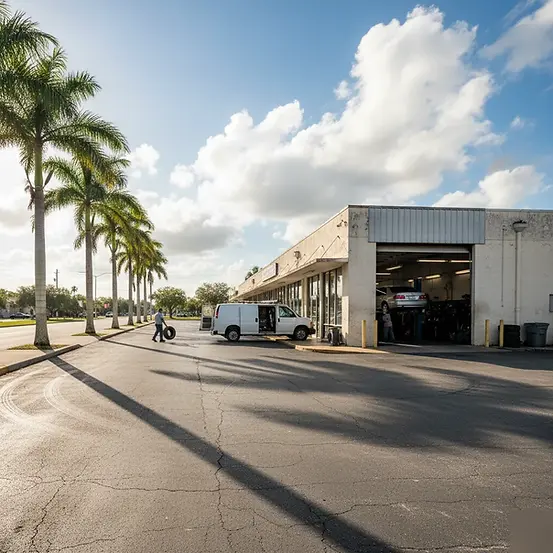
Manual Transmission Repair in Hollywood, FL | CM Auto Repair
Manual transmissions are built for durability, but worn synchros, damaged gears, clutch issues, and shifting problems can develop over time. At CM Auto Repair in Hollywood, FL, our experienced technicians diagnose manual transmission concerns with precision to identify the true cause before recommending repairs. Whether you're experiencing grinding gears, difficulty shifting, a stiff shifter, or unusual transmission noises, we provide honest assessments and dependable repair solutions using quality parts and manufacturer-recommended procedures. Our goal is to restore smooth, precise shifting and reliable performance so you can drive with confidence.
Warning Signs Your Manual Transmission Is Failing
Most drivers in Hollywood don't realize their manual transmission is in trouble until something dramatic happens. But the warning signs show up way earlier than that.
The transmission talks to you. You just have to know what you're listening for.
The most common thing we hear from customers is some version of this: "It started grinding a few weeks ago but I figured it would go away." It doesn't go away. Grinding between gears is almost always the first sign that something's worn or damaged inside the gearbox, and every mile you drive on it makes the repair bigger.
Here are the warning signs that should send you straight to the shop:
-
Grinding or crunching when you shift, especially into second or third gear
-
The gear pops out of position while you're driving
-
The clutch pedal feels soft, spongy, or has to go all the way to the floor
-
A burning smell after highway driving or stop-and-go traffic
-
Difficulty getting into reverse, or reverse feels like you're forcing it
Any one of those is worth a call. Two or more at the same time means don't wait.
We see the gear-popping issue often with drivers around the Hollywood Hills area. Lots of elevation changes, lots of downshifting, and that kind of driving puts real stress on the synchronizers. Once they start going, the transmission won't hold a gear reliably anymore.
There's also a vibration pattern some people mistake for a tire or suspension issue. It's a shudder that happens specifically when you're accelerating in a low gear. That's different from a road vibration. It usually points to worn transmission mounts or a problem with the input shaft.
And fluid leaks matter more than people think. A small puddle under the car that smells like gear oil isn't just a mess. It means the transmission is running low on lubrication, and that speeds up internal wear fast
Catching these signs early keeps a manageable repair from turning into a full rebuild or replacement. Consumer Reports has an excellent guide to maintaining your car’s transmission [1]. The difference in scope, and in how long you're without your car, is real.
Don't ignore the small stuff.

What South Florida Heat Does to Manual Transmission Fluid
Hollywood's heat is no joke. We're talking 90-plus degrees for months at a time, humidity that makes it feel even hotter, and stop-and-go traffic on US-1 and Sheridan Street that keeps your drivetrain working hard when it's already baking.
Most drivers don't think about transmission fluid until something goes wrong. But here's what's actually happening inside your gearbox on a typical Hollywood summer afternoon.
Gear oil has a job: keep metal parts lubricated, cool, and protected from friction. When fluid breaks down from heat, it loses viscosity. It gets thin, and thin fluid doesn't protect gears the way it should. We see this every week, especially on vehicles that spend a lot of time idling in traffic near the I-95 corridor.
Heat-degraded fluid causes a chain of problems most drivers don't connect to their transmission:
-
Gears feel notchy or harder to engage, especially first and second
-
Synchros wear faster because they're not getting proper lubrication
-
You notice a faint burning smell after a long drive
-
Fluid turns dark or develops a burnt odor when you check it
Fluid that looks dark and smells burnt isn't doing its job anymore. It's contaminated, and contaminated fluid accelerates wear on every internal component it touches.
South Florida's climate shortens the service interval for manual transmission fluid. What might last 30,000 miles in a cooler climate could need attention sooner here. That's not a scare tactic, it's just physics. Heat breaks down oil faster.
The fix is straightforward. Fresh fluid restores protection and often makes shifting noticeably smoother. If you've been in Hollywood for a few summers and never touched the transmission fluid, that's worth checking. Our team does a full fluid inspection as part of any manual transmission repair visit, so you'll know exactly where things stand before any work gets done.

Manual Transmission Rebuild vs. Replacement, How to Decide
This is the question that comes up when transmission issues become apparent. There's no one-size answer, it depends on what's actually broken inside the unit.
A rebuild means we open up your existing transmission, find every worn or damaged component, and replace only what's failed: bearings, synchronizers, shift forks, seals. The housing stays. The labor is intensive, but you're keeping the original unit matched to your car. For a lot of vehicles, that's the smarter call. We see it regularly, a car comes in with a grinding third gear, and the fix is one bad synchronizer, not a whole new box.
Replacement means pulling the old unit and dropping in a different one. That could be a remanufactured transmission, a used unit pulled from a salvage yard, or in rare cases a new unit from the dealer. Replacement makes more sense when the case itself is cracked, when multiple internal systems have failed at once, or when the rebuild labor cost starts approaching what a quality replacement unit costs.
Here's how we think through it for every customer:
-
Diagnose first. We won't quote a rebuild or a replacement until exactly what's failed.
-
Check the case and main shaft for damage beyond normal wear.
-
Count how many components need replacement, one or two parts usually points toward rebuild.
-
Factor in the vehicle's age and mileage. A high-mileage car in the Oakwood area might not justify a full rebuild if other systems are also aging out.
-
Give you a straight answer with both options laid out clearly.
But here's what we won't do. We won't recommend a replacement just because it's faster. Rebuilds take more time in the shop, and that's fine. The goal is the right fix for your specific car.
One thing most shops don't tell you: a quality rebuild on a manual transmission can actually outlast a used replacement unit. Used units come with unknown history. A rebuild we do here in Hollywood, exactly what went into it.
The decision isn't complicated once the diagnosis is done. That's always the first step.
The Repair Process from Drop-Off to Test Drive
Here's exactly what happens when you bring your car to us in Hollywood.
We don't just pull the transmission and start guessing. Every manual transmission repair starts with a real diagnosis. You tell us what you're feeling, we listen, and then we get the car on the lift. We check the clutch pedal travel, inspect the linkage, look for fluid leaks around the bellhousing, and test the shifter feel. A driver comes in saying "it won't go into third" and we already know what we're looking at before we pull a single bolt.
Once what's wrong, we walk you through it. No jargon. Just what's broken, why it matters, and what fixing it involves.
Then the actual work begins. Here's how the process runs from start to finish:
-
Drop-off and initial road test to confirm the symptoms firsthand
-
Lift inspection covering the clutch, flywheel, input shaft, and shift linkage
-
Transmission removal if internal repair or rebuild is needed
-
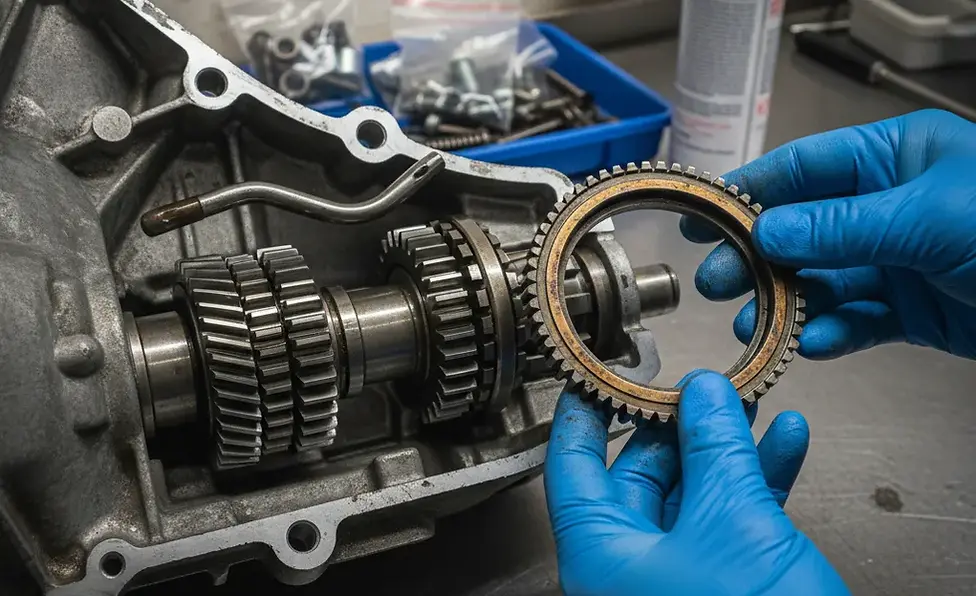
Teardown, cleaning, and inspection of internal components including synchros, bearings, and gear sets
-
Parts replacement using components matched to your specific vehicle
-
Reassembly and reinstallation with fresh transmission fluid
-
Test drive through local Hollywood streets to verify the repair under real driving conditions
A shop test drive isn't a formality. We're running through every gear, checking for slipping, grinding, and proper clutch engagement. If something feels off, we catch it before you ever leave the lot.
Customers in the Oakwood area and nearby neighborhoods often tell us they've been to other shops where nobody explained anything. That's not how we work. You get a clear answer at every stage.
We won't reinstall a transmission we're not confident in. If we open it up and find something unexpected, we call you first. No surprises on your bill, no surprises on the road.
The test drive is where everything gets confirmed. That's the moment we hand the car back knowing it's right
Seasonal Transmission Problems Unique to This Area
Hollywood's weather looks easy on cars from the outside. No snow, no ice, no frozen gear shifts. But we see transmission damage here that mechanics in colder states rarely deal with, and most of it comes from heat.
South Florida heat is relentless from June through September. Transmission fluid breaks down faster in sustained high temperatures, and Hollywood drivers sit in stop-and-go traffic on US-1 and I-95 every day. That combination is brutal on a manual transmission. The fluid loses its ability to protect gear surfaces, and metal-on-metal wear starts happening before you ever notice a symptom.
Here's what we actually see come through the shop during different times of year:
-
Summer: Overheated fluid causing hard, notchy shifts, especially during rush hour on the main corridors
-
Late fall: Clutch slippage after the first cool nights, when rubber seals contract and fluid viscosity changes
-
Rainy season: Moisture getting into the bellhousing on older vehicles, accelerating clutch disc wear
-
Year-round: Grinding from drivers riding the clutch in hillier neighborhoods and on inclined intersections
The terrain here matters more than people think. Drivers in flatter parts of the country can coast through intersections. In Hollywood, you're holding position on an incline at a red light, slipping the clutch to keep from rolling back. Do that twice a day for a year and the clutch disc wears down faster than the manufacturer ever anticipated.
And the ocean air doesn't help. Salt air accelerates corrosion on exposed transmission components, especially on vehicles that park outside year-round. We've pulled shift linkages that were so corroded they were binding mid-shift.
So if your shifts feel stiffer in August than they did in February, that's not in your head. That's heat doing real damage. Getting your transmission fluid checked before summer hits is one of the simplest things you can do to protect the gearbox. We check fluid conditions as part of our manual transmission repair process every time, because here in Hollywood, the fluid tells us most of what we need to know.
Learn more about all of our transmission services and repairs available at our transmission shop.
Frequently Asked Questions
How long does a manual transmission repair take in Hollywood?
Most manual transmission repairs in Hollywood take between two and five days, depending on what's actually wrong. A single bad synchronizer might be done in two days. A full rebuild takes longer because every internal component gets inspected before anything goes back together. If we need to source a specific part, that can add a day. We'll give you a realistic timeline after the diagnosis, not before, so you're never guessing how long you'll be without your car.
Can I keep driving if my transmission is grinding?
No. Driving on a grinding manual transmission makes the damage worse with every mile. Grinding usually means a synchronizer or gear is already worn. The longer you drive it, the more components get damaged, and what starts as a one-part fix can turn into a full rebuild. We hear this regularly from Hollywood drivers who waited a few weeks hoping it would clear up on its own. It never does. If you're hearing grinding, especially into second or third gear, bring it in now.
Does Hollywood's heat actually affect my manual transmission fluid?
Yes, and more than most drivers expect. South Florida's heat breaks down gear oil faster than cooler climates. Stop-and-go traffic on US-1 and Sheridan Street keeps your drivetrain working hard in high temperatures, which shortens how long fluid stays effective. Once fluid degrades, it gets thin and stops protecting your gears properly. If you've driven Hollywood summers for a few years without checking your transmission fluid, that's worth doing. Dark fluid with a burnt smell is a clear sign it needs to be replaced.
What should I bring when I drop my car off for transmission service?
Bring your car, your keys, and a clear description of what you've been noticing — when it happens, which gears are affected, and how long it's been going on. That information helps us diagnose faster. If you've had any recent work done on the clutch or drivetrain, let us know that too. You don't need to bring paperwork or anything special. The more specific you can be about the symptoms, the quicker we can pinpoint the problem and give you a straight answer on what needs to be done.
Is a rebuild better than a replacement for my specific car?
It depends on what's actually failed inside the unit, which is why we diagnose before recommending anything. If one or two components are worn, like a bad synchronizer or a worn bearing, a rebuild is usually the smarter call. Your original transmission is already matched to your car. Replacement makes more sense when the case is cracked or multiple systems have failed at once. One thing worth knowing: a quality rebuild on a manual transmission can actually outlast a used replacement unit, which comes with an unknown history.
Why does my transmission pop out of gear on hilly roads around Hollywood Hills?
Gear-popping in the Hollywood Hills area is something we see regularly. The elevation changes mean a lot of downshifting, and that kind of driving puts real stress on the synchronizers. Once synchronizers start wearing out, the transmission can't hold a gear reliably under load. It's not a clutch problem, it's inside the gearbox. The fix depends on how far the wear has progressed, which is why early diagnosis matters. If your car is popping out of gear on downhill stretches, don't wait for it to get worse.