

Differential Fluid Change in Hollywood, FL
Need a differential fluid change in Hollywood, FL? Our technicians drain old, degraded fluid, inspect for metal particles, moisture, leaks, and wear, then refill your differential with the correct fluid for your vehicle. Fresh differential fluid helps reduce friction, protect gears and bearings, and keep your drivetrain running smoothly. Get reliable fluid service from experienced technicians at our auto repair shop in Hollywood.
What a Differential Fluid Change Actually Does for Your Vehicle
Most drivers in Hollywood have never thought twice about differential fluid, and that's fine, until the gears start grinding or the repair bill shows up.
Here's what's actually happening inside that housing: your differential is a set of gears that lets your wheels spin at different speeds when you turn a corner. Without it, your tires would skip and fight every curve. The fluid inside keeps those gears from eating each other alive. It lubricates, it cools, and it carries away the tiny metal particles that wear off during normal use.
Over time, that fluid breaks down. The additives that protect the gear surfaces stop working. The fluid gets contaminated with metal shavings and moisture. What was once a slick, protective barrier turns into something closer to gritty sludge. And gritty sludge doesn't protect anything.
A differential fluid change flushes out that old, degraded fluid and replaces it with fresh fluid that actually does its job. Clean fluid means the gears run cooler with far less friction. You get smoother acceleration, quieter operation through turns, and a drivetrain that lasts.
This is a pattern we see all the time. Someone from the Oakwood area comes in with a whining noise on turns or a vibration at highway speed, and sure enough, the differential fluid is dark, gritty, and well past due. A simple fluid change fixes it before it becomes a gear replacement.
The difference between front, rear, and four-wheel drive setups matters here too. Some vehicles have one differential, some have two or three. Each one holds its own fluid and needs attention on its own schedule. According to the Society of Automotive Engineers, gear oil degrades faster under towing, off-road, or stop-and-go driving conditions, all things that are common in Hollywood traffic [1].
Skipping this service doesn't save money. It delays a small cost and sets up a much bigger one.
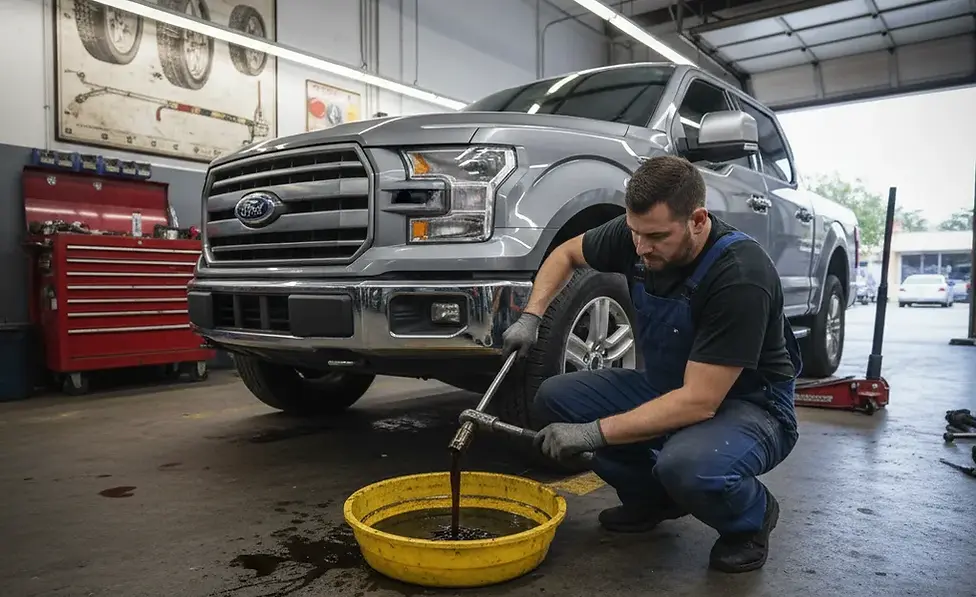
Warning Signs Your Differential Fluid Is Breaking Down
Most drivers in Hollywood don't think about their differential fluid until something already feels wrong. By then, the damage is often done.
The most common thing we hear: a customer comes in saying their car makes a whining or humming noise when they turn. Sometimes it's a low growl that gets louder the faster they go. That sound is the differential gears running without proper lubrication. The fluid has broken down and is no longer doing its job.
These are the warning signs you shouldn't ignore:
-
A whining, humming, or grinding noise from the rear or front axle area
-
Vibration or shuddering when turning, especially at low speeds
-
A burning smell coming from underneath the vehicle
-
Clunking or clicking sounds when accelerating from a stop
-
Visible fluid leaking under the rear or front of the vehicle
That burning smell is a big one. Old differential fluid breaks down under heat and pressure. When it can't protect the gears anymore, the metal-on-metal friction generates serious heat. You might notice it after sitting in traffic near Oakwood or after a long stretch on US-1.
The leaking fluid situation is more common than people think. The differential has seals that wear over time. A small drip on your driveway might seem minor, but low fluid levels accelerate wear faster than almost anything else we deal with.
So what does healthy fluid look like? Fresh differential fluid is typically amber or light brown. When it's due for a change, it turns dark (almost black), and gets thick or gritty from metal particles. When we pull the drain plug on a high-mileage vehicle, the fluid coming out looks nothing like what went in.
But here's the thing most people miss. The differential doesn't always give you obvious warning signs before serious damage starts. Some vehicles run quietly right up until a bearing or gear fails. That's why mileage-based service matters just as much as symptom-based service in Hollywood's stop-and-go driving conditions.
Don't wait for the noise to get louder. If any of these signs sound familiar, get it checked out.

How South Florida's Heat and Salt Air Accelerate Fluid Degradation
Hollywood isn't like most cities. The heat here is relentless, and the salty air coming off the Atlantic doesn't help. That combination does something to differential fluid that most drivers never think about until there's a problem.
Here's what actually happens: differential fluid is designed to handle heat, but South Florida pushes it harder than the manufacturer ever imagined when they set that service interval. Sustained high temperatures break down the fluid's viscosity faster. It gets thin, and thin fluid doesn't protect your gears the way it should.
Salty air makes it worse. Vehicles driven near the coast are more likely to have this problem. Salt accelerates oxidation inside the differential housing. The fluid absorbs moisture, and moisture mixed with heat turns the fluid into something closer to sludge than lubricant. That sludge doesn't coat gear surfaces evenly. It leaves metal grinding against metal in ways that wear things down fast.
A few specific things we watch for on vehicles in this area:
-
Fluid that's darkened and smells burnt well before the expected service interval
-
Metal particles suspended in the fluid when we drain it
-
Moisture contamination that turns the fluid milky or grayish
-
Corrosion on the differential housing drain plug and fill plug
Drivers coming in from the Oakwood area, or anywhere close to the beach, tend to see these signs earlier than the service schedule suggests. That's not a coincidence.
According to Machinery Lubrication Magazine, high-temperature operation is one of the primary factors that shortens lubricant service life in drivetrain components [2]. South Florida checks that box every summer.
So if you're following a service interval that was set for a driver in Ohio, you're probably going too long. The environment here demands more from your vehicle, and your differential fluid is one of the first things to show it.
What Happens Step by Step During a Differential Fluid Change
A lot of customers in Hollywood ask what happens during this service. It's a great question, and we're happy to explain.
We start by getting the vehicle up on the lift so we can see the differential clearly. Front, rear, or both, depending on your drivetrain. Once it's up, we inspect the housing for any signs of leaks or damage before we touch a single drain plug. If something looks wrong before we even start, we'll tell you right then.
Here's the process from there:
-
Remove the drain plug or differential cover and let the old fluid drain completely.
-
Inspect the drained fluid for metal shavings, a burnt smell, or a milky color that signals water intrusion.
-
Clean the drain plug threads and replace the crush washer or gasket if needed.
-
Reinstall the drain plug or reseal the cover with fresh gasket material.
-
Fill the differential with the correct fluid type and viscosity for your specific vehicle.
-
Check the fill level, torque everything to spec, and lower the vehicle.
That fluid inspection step matters more than people realize. Old fluid that looks like dark sludge with tiny metal flakes floating in it tells you the gears have been working too hard for too long. Catching it here means we can flag it before it turns into a much bigger repair.
Customers near Liberia Avenue sometimes come in after buying a used vehicle with no service history. We pull the differential fluid and it's black, thick, and way past due. That's not uncommon at all.
The fill step isn't as simple as pouring in fluid either. Different differentials, limited-slip units especially, need specific additives mixed in. Using the wrong fluid in a limited-slip differential causes chatter and wear. We always confirm the right spec before we fill.
The whole service is straightforward when it's done right. Most vehicles are in and out without a long wait.
AWD, 4WD, and Trucks Require More Than One Differential Serviced
Here's something a lot of drivers in Hollywood don't realize until we're under their vehicle: if you drive an AWD or 4WD truck or SUV, you've got more than one differential. Sometimes three. And every one of them needs fresh fluid.
It's a consistent pattern with pickup trucks and larger SUVs. The owner comes in asking about a differential fluid change for the rear, we do the inspection, and we find the front differential and transfer case are just as overdue. All three are running on fluid that's broken down, darkened, and full of metal particles. That's not a small thing.
Here's what most AWD and 4WD vehicles are actually carrying:
-
A rear differential that handles power to the back axle
-
A front differential managing the front axle on 4WD systems
-
A transfer case that splits power between the front and rear
Each one holds its own fluid. Each one has its own service interval. Each one can fail independently if it's ignored long enough.
We work on a lot of trucks out of the Oakwood and West Hollywood adjacent areas, and the pattern is the same every time. The rear gets done somewhere along the way, but the front differential and transfer case get skipped. Maybe the last shop didn't mention it. Maybe the owner just didn't know. Either way, by the time we see it, the fluid looks nothing like it should.
Transfer case fluid is its own category. It's not the same as differential fluid, it doesn't last as long as people assume, and it's easy to forget because most drivers never think about it. But if that fluid breaks down, you'll start feeling it in how the vehicle shifts between two-wheel and four-wheel drive. Hesitation. Grinding. Sometimes it just stops engaging cleanly.
And the cost of catching this early versus waiting until something seizes? Not even close.
If you drive an AWD or 4WD vehicle in Hollywood and you're not sure when any of these fluids were last changed, that's worth a conversation. We'll check all of it, not just the one you came in for.
Discover fast, reliable oil changes and fluid maintenance for drivers across Hollywood, FL.

Frequently Asked Questions
How often should I change my differential fluid in Hollywood?
Most vehicles need a differential fluid change every 30,000 to 60,000 miles, but Hollywood's heat and salt air shorten that window. South Florida's sustained high temperatures break down fluid faster than the manufacturer's baseline interval assumes. If you tow, drive near the coast, or spend time in stop-and-go traffic on US-1, you're pushing your fluid harder than average. Don't just follow the sticker — have the fluid inspected at each oil change so you catch degradation before it becomes damaged.
What does it mean when my car whines or hums during turns in Hollywood?
A whining or humming noise during turns usually means your differential fluid is breaking down and no longer lubricating the gears properly. This is one of the most common things we hear from drivers coming in from the Oakwood area. The sound comes from gear surfaces running with too much friction. Catching it early means a fluid change can fix it. Waiting too long means the gears themselves wear down, and that's a much bigger repair.
Does Hollywood's salt air really affect my differential fluid?
Yes, and more than most drivers expect. Salt air from the Atlantic accelerates oxidation inside the differential housing. Moisture mixes with heat and turns the fluid into a gritty sludge that can't coat gear surfaces evenly. Vehicles driven near the coast in Hollywood often show dark, contaminated fluid well before the standard service interval. If your service schedule was set for a driver in a dry, northern climate, it was not designed for what your drivetrain deals with here.
Can my differential fluid look fine but still need changing?
Yes, and this catches a lot of drivers off guard. Some vehicles run quietly right up until a bearing or gear fails. The differential doesn't always give obvious warning signs before serious damage starts. Fresh fluid is amber or light brown. When it's due for a change, it turns dark and thick with metal particles. The only way to know for sure is to check it. Mileage-based service matters just as much as waiting for a symptom in Hollywood's driving conditions.
What happens if I ignore a small differential fluid leak?
A small drip on your driveway can turn into a major drivetrain failure faster than you'd think. Low fluid levels accelerate gear and bearing wear more than almost anything else. The differential seals wear over time, especially with Hollywood's heat cycling. What starts as a minor leak eventually leaves the differential running low or dry. By the time you notice a noise or vibration, the damage is already happening. A quick inspection can catch a seal issue before it becomes a full differential replacement.
How long does a differential fluid change take, and do I need to leave my car?
A differential fluid change typically takes about 30 to 45 minutes for most vehicles. If your vehicle has multiple differentials, like a four-wheel drive setup, plan for a bit more time since each unit holds its own fluid and needs separate attention. Most customers drop off their vehicle and are back on the road the same day. We'll let you know upfront how many differentials your specific vehicle has so there are no surprises when you come in.